10 Best Rock-Type Fusions in Pokémon Infinite Fusion (6.7.2)
What are the best rock type fusions in Pokémon Infinite Fusion? The short answer: Tyranitar + Metagross (Rock/Steel, ~135 Attack) is the best overall rock fusion, Tyranitar + Garchomp (Rock/Ground, Sand Stream) is the best offensive one, and Tyranitar + Shuckle (Rock/Bug, ~190 Defense) is the best wall. This guide ranks the 10 best rock-type fusions in Pokémon Infinite Fusion for your team, with exact head/body orders, resulting typings, formula-estimated stats, ability choices, and build paths in version 6.7.2. Nobody has written a dedicated rock-type fusion guide before, and the existing lists either skip rock fusions entirely or get the typing wrong, so every pick below is built on the current fusion math.
Quick note: pokemon-infinitefusions.site is an unofficial fan guide. We are not affiliated with Nintendo, Game Freak, or the creators of Pokémon Infinite Fusion.
Rock’s Five Weaknesses Are Why Fusion Order Matters
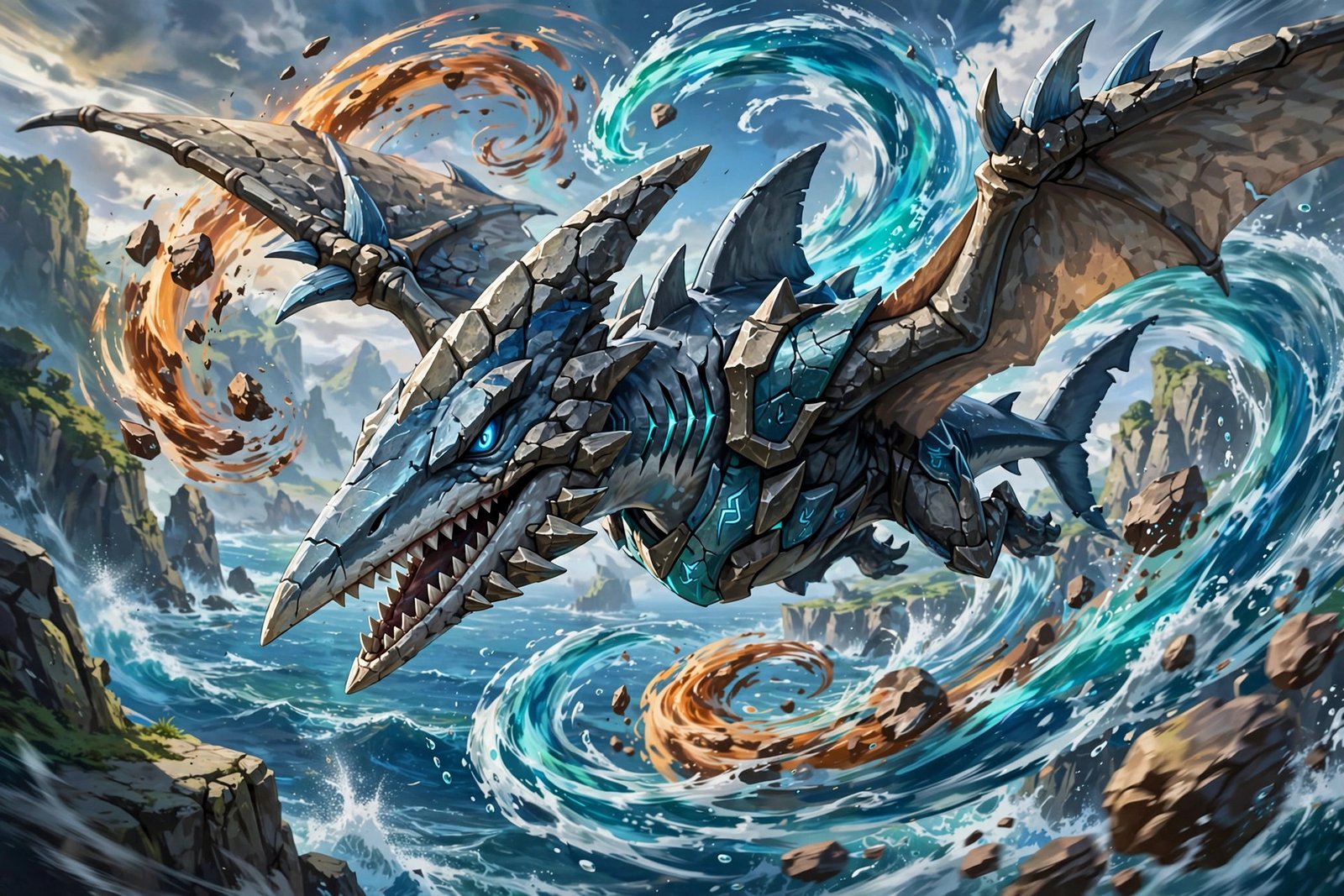
Rock is weak to Fighting, Ground, Steel, Water, and Grass. Five weaknesses is the most of any type in the game, which means a pure Rock type is a liability and a well-fused Rock type is a weapon. The fusion typing rule decides everything: the head donates its primary type, the body donates its secondary type, with the anti-redundancy rule swapping in the body’s primary type when the two would match.
This rule creates the single most misunderstood fusion in the game. Garchomp (head) + Tyranitar (body), the famous pairing every list recommends, is Dragon/Dark, not a rock fusion at all: Garchomp’s head donates Dragon, Tyranitar’s body donates Dark. Flip the order to Tyranitar (head) + Garchomp (body) and you get Rock/Ground, a genuine rock-type fusion. Same two Pokémon, completely different typings, and most guides never explain that the order is the whole decision. Our #1 pick below is the rock-keeping order, and the FAQ explains when the Dragon/Dark order is actually better.
The same trap catches “Maitar,” the beloved Mawile head + Tyranitar body fusion. It is Steel/Dark, not rock-typed: Mawile’s head donates Steel, Tyranitar’s body donates Dark. It is a great fusion and it does not belong on a rock-type list. If you came here from a generic best-fusions list wondering where the rock fusions were, this is why: the famous Tyranitar pairings shed their Rock typing, and nobody wrote the rock-keeping versions down until now. Verify every order in the Pokémon Infinite Fusion calculator before you fuse.
Sand Stream: The Ability That Changes Rock’s Math
Tyranitar’s Sand Stream summons a sandstorm on switch-in, and sand does two things that reshape every pick below. First, it boosts the Special Defense of Rock types by 50 percent, which patches Rock’s special frailty for free. A Tyranitar-head fusion with 97 Special Defense effectively sits at 145 while sand is up. Second, it chips every non-Rock, non-Ground, non-Steel opponent for 1/16 of their HP each turn, which breaks Focus Sashes, punishes switches, and wins long games.
This is why Tyranitar heads four of the ten picks. You are not just picking a stat line, you are picking permanent weather. The cost is honest too: sand chips your own non-immune teammates, so a sand team wants Rock, Ground, and Steel partners in the other slots. Our team builder guide covers building around weather without sabotaging the rest of your six.
The Stat Math: Rock Attacks From the Bottom
The 2/3 rule: Attack, Defense, and Speed lean two-thirds toward the body, while HP, Special Attack, and Special Defense lean two-thirds toward the head. Rock is an overwhelmingly physical type, which means the best rock attackers, Tyranitar, Garchomp, Rhydon, Golem, Kabutops, belong on the bottom as bodies, where their Attack gets the two-thirds weight. The head slot goes to whichever parent gives you the typing and ability you want, which is Tyranitar more often than not.
The exception is special rock attackers: Omastar and Kingdra want the head-adjacent treatment for their Special Attack, which is why the two special picks below flip the usual script. Read our Pokémon fusion tool guide for worked examples of the stat math before you commit splicers to a build.
The 10 Best Rock Fusions, Ranked
Every pick below uses the 6.7.2 fusion rules with the anti-redundancy rule applied. Stats are formula estimates from the 2/3 rule using the parents’ official base stats. Rock/Ground appears several times because it is the natural result of fusing rock parents; the roles are completely different, so read the role, not just the typing.
#1 Tyranitar (Head) + Garchomp (Body): The Sand Tyrant
Resulting type: Rock/Ground. This is the rock-keeping order of the most famous fusion in Infinite Fusion. Tyranitar’s primary Rock plus Garchomp’s secondary Ground gives you STAB on both Stone Edge and Earthquake, the two best physical moves of their types, on a 131-Attack frame with permanent sand behind it. Rock/Ground has six weaknesses (Fighting, Ground, Steel, Water, Grass, Ice), and it does not care, because it knocks out most of those threats before they move.
Stats land around 131 Attack, 100 Defense, 88 Speed, 103 HP, and 95 Special Defense (effectively 142 in sand). The 88 Speed is the honest check on this pick: it outspeeds walls and slower attackers but loses to real sweepers, which is why the moveset carries priority or a Choice Scarf option.
Ability: Sand Stream (Tyranitar) is the pick that defines the build: free Special Defense, free chip damage, free Sash-breaking. Rough Skin (Garchomp) is the alternative if your team already has weather and you want contact punishment instead. Stone Edge, Earthquake, Crunch or Ice Fang for coverage, and Stealth Rock or Dragon Dance is the set. Dragon Dance patches the Speed issue and turns the 131 Attack into a sweep; Stealth Rock makes it a lead that sets hazards and then attacks.
What it beats: Fire, Electric, Poison, Rock, and Steel types, plus anything frail that Earthquake or Stone Edge catches. What threatens it: fast Water, Grass, and Ice types, and priority Aqua Jet. Keep a Grass or Water resist behind it.
#2 Tyranitar (Head) + Metagross (Body): The Iron Avalanche
Resulting type: Rock/Steel. Tyranitar’s primary Rock plus Metagross’s secondary Steel gives you the best defensive typing available to any rock fusion: nine resistances (Normal, Flying, Poison, Bug, Psychic, Ice, Dragon, Fairy, Rock) and only three weaknesses (Fighting, Ground, Water). Triple-fusion guides hype “Tychanagross” (Tyranitar + Metagross + Garchomp) as a post-game project; this is 90 percent of that power with a single splicer, available the moment you have both parents.
Stats land around 135 Attack, 123 Defense, 97 Special Defense (effectively 145 in sand), 93 HP, and 67 Speed. The 135 Attack is the highest on this list, and it sits on a frame that walls most of the game. The 67 Speed means this pick never tries to be fast; it switches in for free on resisted hits and starts breaking things.
Ability: Sand Stream (Tyranitar) for the full package, or Clear Body (Metagross) if you are tired of Intimidate and Sticky Web ruining your day. Meteor Mash, Stone Edge, Earthquake, and Bullet Punch or Pursuit is the set. Bullet Punch deserves special mention: priority on a 135-Attack Steel type picks off the faster Fighting types that threaten you, flipping the one matchup Rock/Steel fears.
What it beats: everything its nine resistances wall, plus Rock, Ice, Fairy, and Flying types offensively. What threatens it: Fighting, Ground, and Water coverage, especially from faster attackers. One Fighting resist on the team and this fusion has almost no losing matchups.
#3 Aerodactyl (Head) + Kabutops (Body): The Swift Fossil
Resulting type: Rock/Water. Aerodactyl’s primary Rock plus Kabutops’s secondary Rock would collide, so the anti-redundancy rule gives you Kabutops’s primary Water instead. The result is the fastest rock fusion on this list with a typing that erases Rock’s Fire weakness and adds a Water STAB. Rock/Water is weak to Fighting, Ground, Electric, and Grass, which is a manageable four.
Stats land around 112 Attack, 97 Speed, and 80 HP. The 97 Speed is the story: it outspeeds most of the mid-game and everything slower, which is exactly the tier where rock fusions usually struggle. Swift Swim doubles that in rain, turning a good Speed tier into an elite one.
Ability: Swift Swim (Kabutops) with rain support is the exciting build: double Speed and STAB Liquidation off 112 Attack. Pressure (Aerodactyl) is the honest default for teams without rain, draining PP from the stall matchups. Stone Edge, Liquidation or Waterfall, Earthquake or X-Scissor, and Swords Dance is the set. If your team has a rain setter, this pick jumps several spots in these rankings.
What it beats: Fire, Rock, Ground, and Flying types, plus anything slower in rain. What threatens it: Electric and Grass coverage, and faster threats outside rain. Do not leave it in on an Electric type.
#4 Tyranitar (Head) + Omastar (Body): The Shell Smash Nuke
Resulting type: Rock/Water. Same typing as #3, completely different job. Tyranitar’s head gives Rock primary and Sand Stream; Omastar’s body donates Water through the redundancy rule and brings Shell Smash, the best setup move in the game: +2 Attack, +2 Special Attack, +2 Speed at the cost of -1 defenses. One free turn and this fusion outspeeds and outguns everything.
Stats land around 102 Special Attack, 120 Defense, 92 HP, and 55 Speed. The 55 Speed looks terrible until Shell Smash doubles it. The 120 Defense means it usually survives the hit it takes while setting up, and the sand-boosted Special Defense covers the special side. This is a setup sweeper wearing a tank’s armor.
Ability: Shell Armor (Omastar) is the correct pick: it blocks critical hits during your setup turn, which is the main way Shell Smash sweepers die. Swift Swim (Omastar’s hidden ability) is the rain-team alternative. Sand Stream (Tyranitar) fights the Shell Smash plan by chipping your own teammates, so skip it here. Shell Smash, Hydro Pump or Surf, Ancient Power or Power Gem, and Ice Beam is the set. Set up on a forced switch, then sweep.
What it beats: everything slower after one Shell Smash, which is nearly everything. Fire, Rock, and Ground types die before the setup even matters. What threatens it: priority moves (they ignore your Speed), faster Electric and Grass types before setup, and Unaware walls. Never set up into priority.
#5 Golem (Head) + Rhydon (Body): The Head Smash Engine
Resulting type: Rock/Ground. Golem’s primary Rock plus Rhydon’s secondary Rock collides, so the redundancy rule hands you Rhydon’s primary Ground. The typing matches #1, but the concept is entirely different: Rock Head plus Head Smash, a 150-power STAB move with zero recoil. No other rock fusion hits a single target this hard.
Stats land around 127 Attack, 123 Defense, 88 HP, and 42 Speed. The 42 Speed is glacial, which is why this pick does not try to outspeed anything: it switches in on something it walls, clicks Head Smash, and deletes it. The 123 Defense means most physical attackers cannot punish the switch-in.
Ability: Rock Head (both parents have it) is non-negotiable; without it Head Smash costs half your HP per click. Sturdy is the backup if you want a guaranteed trade against faster threats. Head Smash, Earthquake, Stone Edge or Rock Blast, and Stealth Rock or Explosion is the set. Explosion on a 127-Attack frame is a legitimate emergency button.
What it beats: anything that does not resist Rock, which is most of the game, plus Fire, Electric, and Poison types. What threatens it: anything faster with Water, Grass, or Ground coverage, which is a long list. This is a wallbreaker, not a sweeper; bring it in, break something, bring it out.
#6 Tyranitar (Head) + Shuckle (Body): The Wall With Six Weaknesses
Resulting type: Rock/Bug. Tyranitar’s primary Rock plus Shuckle’s secondary Rock collides, so the redundancy rule gives you Shuckle’s primary Bug. The typing is the worst on this list: weak to Fighting, Ground, Water, Fire, Flying, and Rock (4x). And it does not matter, because the defenses are the highest on this list by a distance: roughly 190 Defense and 187 Special Defense, the latter effectively 280 in sand.
Stats land around 190 Defense, 187 Special Defense, 73 HP, and 24 Speed. Nothing breaks through except super-effective hits, and Sturdy guarantees you survive the first one of those too. The 51 Attack is honest about this pick’s job: it does not attack, it stalls, sets hazards, and refuses to die.
Ability: Sturdy (Shuckle) guarantees one turn of work against anything. Sand Stream (Tyranitar) is the alternative that pushes the Special Defense into absurdity but chips your own team. Stealth Rock, Toxic, Encore or Knock Off, and Rest or Protect is the set. Encore is the tech that makes the weaknesses manageable: lock the opponent into their coverage move, switch to your resist, and the wall did its job.
What it beats: anything without super-effective coverage, which it stalls out with Toxic and hazards. What threatens it: the six weaknesses, Taunt, and setup sweepers that ignore Toxic. This is a specialist tool for stall teams, not a generalist.
#7 Sudowoodo (Head) + Golem (Body): The Early-Game Anchor
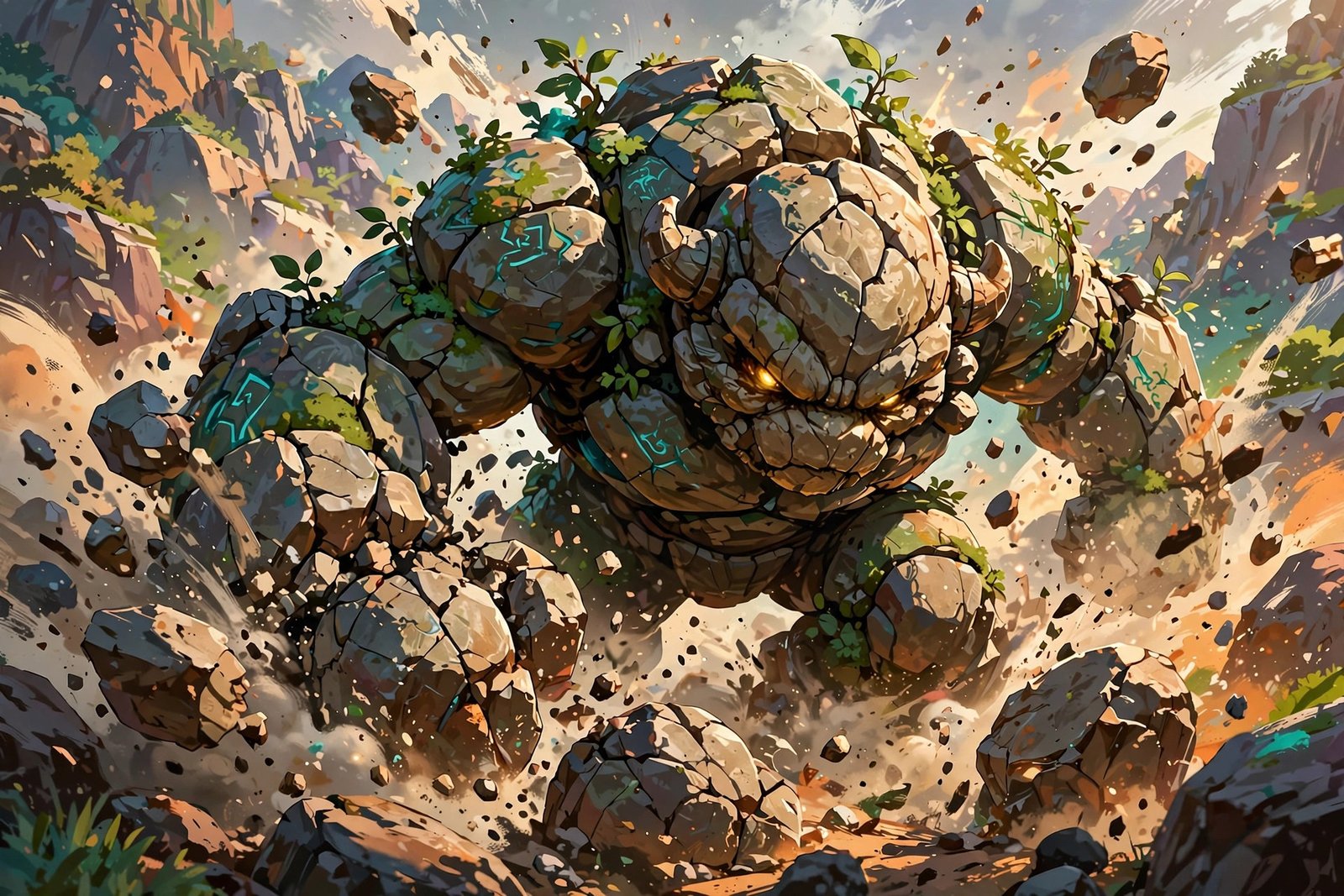
Resulting type: Rock/Ground. Sudowoodo’s primary Rock plus Golem’s secondary Ground gives you the same typing as #1 and #5 at a fraction of the investment: both parents are available early, and the build works the moment you have splicers. This is the rock fusion for players who want the archetype now, not after the Elite Four.
Stats land around 113 Attack, 125 Defense, 73 HP, and 40 Speed. The 125 Defense is the selling point: early-game physical attackers simply do not get through, and Sturdy covers the special side’s surprises. The 113 Attack with STAB Stone Edge and Earthquake is genuinely threatening at the stage of the game where you build this.
Ability: Sturdy (both parents have it) is the pick; it guarantees you survive any single hit at full HP, which means every bad matchup is still a trade. Rock Head (Golem) is the alternative for recoil-free Double-Edge. Stone Edge, Earthquake, Sucker Punch, and Stealth Rock is the set. Sucker Punch patches the 40 Speed against faster threats, which is most of them.
What it beats: early-game Normal, Fire, Electric, and Flying types, plus anything physical that cannot break 125 Defense. What threatens it: special attackers, Water and Grass coverage, and anything faster with a super-effective move. It falls off late-game; plan its replacement when you reach the Elite Four.
#8 Tyranitar (Head) + Kingdra (Body): The Dragon Cannon
Resulting type: Rock/Dragon. Tyranitar’s primary Rock plus Kingdra’s secondary Dragon gives you the rarest typing on this list and the only mixed attacker: 108 Attack and 95 Special Attack with STAB on both sides. Rock/Dragon is weak to Fighting, Ground, Steel, Ice, Dragon, and Fairy, but it resists Fire, Water, Electric, and Flying, which covers the types that usually punish rock fusions.
Stats land around 108 Attack, 95 Special Attack, 100 Defense, 97 Special Defense (effectively 145 in sand), 92 HP, and 77 Speed. Nothing here is elite, and that is fine: mixed attackers win by hitting the opponent’s weaker defense, not by overwhelming one stat.
Ability: Sniper (Kingdra) is the fun pick: critical hits deal triple damage instead of 1.5x, which turns Stone Edge’s high crit rate into a legitimate strategy. Sand Stream (Tyranitar) is the consistent pick for the Special Defense boost. Stone Edge, Draco Meteor or Dragon Pulse, Hydro Pump, and Iron Head or Crunch is the set. Scope Lens plus Sniper plus Stone Edge is the meme build that occasionally wins games it should not.
What it beats: Fire, Water, Electric, and Flying types, plus special walls (hit the physical side) and physical walls (hit the special side). What threatens it: faster Dragon, Ice, and Fairy types, and its own middling Speed. A Choice Scarf fixes the Speed if your team can spare the slot.
#9 Graveler (Head) + Machop (Body): The No Guard Gambit
Resulting type: Rock/Fighting. Graveler’s primary Rock plus Machop’s primary Fighting (single-typed body) gives you the earliest viable rock fusion in the game and the funniest: No Guard makes every move on both sides always hit. DynamicPunch, a 100-power Fighting move that confuses, goes from 50 percent accuracy to guaranteed. Stone Edge goes from 80 percent to guaranteed. The 85 Attack does not look like much until every hit lands and the opponent is confused.
Stats land around 85 Attack, 72 Defense, 60 HP, and 35 Speed. Everything about this stat line says early-game: it is outclassed by #1 in every number, but #1 needs a Tyranitar and a Garchomp, and this needs a Graveler and a Machop. Different stages of the game, different answers.
Ability: No Guard (Machoke line, check your Machop’s ability before fusing) is the entire concept. Sturdy (Graveler) is the backup if your Machop does not have No Guard, and it is still a fine early-game pick. DynamicPunch, Stone Edge, Earthquake or Rock Slide, and Bulk Up is the set. Bulk Up plus guaranteed DynamicPunch confusion is a genuine early-game sweep condition.
What it beats: early-game Normal, Rock, Steel, Ice, and Dark types, plus anything that cannot handle confusion. What threatens it: eight weaknesses (Fighting, Ground, Steel, Water, Grass, Flying, Psychic, Fairy) and everything faster, which is everything. This is a fun early-game build with a hard expiry date; enjoy it, then replace it.
#10 Aerodactyl (Head) + Tyranitar (Body): The Fast Dark Horse
Resulting type: Rock/Dark. Aerodactyl’s primary Rock plus Tyranitar’s secondary Dark gives you the fastest Tyranitar-body fusion on this list: 84 Speed with 124 Attack and STAB on Stone Edge and Crunch. Rock/Dark is weak to Fighting (4x), Ground, Water, Grass, Bug, Fairy, and Steel, which is a long list, but the offensive typing hits Psychic and Ghost super effectively while Stone Edge handles the rest.
Stats land around 124 Attack, 84 Speed, 80 HP, and 75 Special Defense. The 84 Speed is the point: it outspeeds the mid-game tier that the slower rock fusions lose to, which gives this pick a genuinely different role from #1 and #2. It trades bulk for tempo.
Ability: Unnerve (Tyranitar) stops berry strategies cold, which matters more than it sounds against stall. Pressure (Aerodactyl) is the alternative for PP-stalling defensive teams. Stone Edge, Crunch, Earthquake or Fire Fang, and Taunt or Stealth Rock is the set. Taunt on an 84-Speed rock type shuts down the hazard setters and setup sweepers that prey on slower rock fusions.
What it beats: Psychic, Ghost, Fire, and Flying types, plus slower setup sweepers that Taunt shuts down. What threatens it: faster Fighting types above all (the 4x weakness), plus Fairy and Bug coverage. Never stay in on a Fighting type.
Covering Rock’s Five Weaknesses
No fusion partner removes all five of Rock’s weaknesses, so the pattern across the ten picks is the lesson: Steel bodies (Metagross) cut the list to three weaknesses and add nine resistances. Water bodies (Kabutops, Omastar) erase the Fire weakness and add a useful offensive STAB. Ground bodies (Garchomp, Rhydon, Golem) double down on offense with Earthquake STAB at the cost of keeping most weaknesses. Dragon (Kingdra) and Dark (Tyranitar as a body) trade bulk for offensive coverage.
When you build outside this list, pick the body for the weakness you fear most, then cover the rest with teammates. A Rock/Steel fusion still fears Fighting, so the next team slot should be a Flying, Psychic, or Fairy partner. A Rock/Water fusion still fears Electric and Grass, so a Ground or Dragon partner fits. Build the support before the fusion, not after.
Building on a Splicer Budget
Fusions cost splicers, and splicers cost money: DNA Splicers run ¥300 at the Poké Mart, Super Splicers ¥1000 after four badges, and the Infinite Splicer key item (earned by beating the robot in the Cinnabar lab) makes refusion free. DNA Reversers cost ¥300 and flip a fusion’s head/body order, which is the cheapest way to test both orders of a pairing before committing to a moveset.
The workflow that wastes nothing: plan the order in the fusion calculator, fuse with a regular DNA Splicer, check the ability you received, and use a DNA Reverser if the order needs flipping. Never fuse blind on a build that needs a specific ability; the ability choice is the difference between the #4 Shell Smash sweeper working and failing. If you are starting fresh for a rock-focused run, download Pokémon Infinite Fusion version 6.7.2 first and confirm your patch before spending anything.
Where the Rock Parents Come From
The fossil parents, Aerodactyl, Kabutops, and Omastar, are revived from fossils found during the story, which makes them mid-game projects worth planning for. Tyranitar evolves from Pupitar at level 55, so the Larvitar line is a long-term investment that pays off late. Geodude, Onix, Rhyhorn, and Sudowoodo lines are standard encounters across Kanto and Johto, available early enough for the #7 and #9 builds.
Do not trust third-party encounter tables for specifics; many were written for older versions and the details drift. Check the exact encounter data in our Infinite Fusion Pokédex, which tracks the current version.
Rock Fusion Questions, Answered
Why isn’t Garchomp + Tyranitar (Dragon/Dark) on this list?
Because it is not a rock-type fusion. Garchomp head + Tyranitar body gives Dragon/Dark: the head donates Dragon, the body donates Dark, and the Rock typing is lost entirely. It is an excellent fusion and it belongs on a general best-fusions list, not here. The #1 pick is the same two Pokémon in the order that keeps the Rock typing (Rock/Ground). Order is everything in fusion building.
Is Maitar (Mawile + Tyranitar) a rock fusion?
No. Mawile head + Tyranitar body is Steel/Dark: Mawile’s head donates Steel, Tyranitar’s body donates Dark. It is one of the most famous fusions in the game and it is not rock-typed. This is the most common rock-fusion misconception, and now you know the real typing.
What is the best rock fusion for the early game?
Graveler head + Machop body (#9) is the earliest viable option: both parents are common early encounters, No Guard DynamicPunch trivializes early fights, and the build costs almost nothing. Sudowoodo head + Golem body (#7) is the mid-game upgrade with real defensive stats. Save the Tyranitar builds for late-game; the Larvitar line takes until level 55 to pay off.
Does Sand Stream hurt my own team?
Yes, sand chips every Pokémon that is not Rock, Ground, or Steel for 1/16 HP per turn. A sand team should be built mostly from those three types, which is conveniently also the answer to Rock’s weaknesses: Steel covers Fighting, Ground covers Electric, Water covers Fire. The chip damage also breaks enemy Focus Sashes and punishes switching, so it is a feature as much as a cost.
Can I undo a fusion if I pick the wrong order?
Yes. DNA Reversers cost ¥300 and flip a fusion’s head/body order, and unfusing is always possible. The cheap workflow is: preview in the fusion calculator, fuse, check the ability, reverse if needed. Never grind for a second copy of a parent just to test an order.
Sources: fusion typing and stat rules from the Infinite Fusion Fandom wiki (Fusion FAQs); Tyranitar base stats and Sand Stream mechanics from Bulbapedia; game version 6.7.2 confirmed via the official wiki main page.