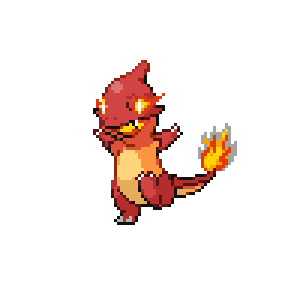
Charizard Guide for Pokémon Infinite Fusion: Best Fusions, Stats & Where to Find Charmander
Charizard is the most picked starter evolution in Pokémon Infinite Fusion for a reason that has nothing to do with nostalgia. It has the highest Special Attack of the three Kanto starter final forms (base 109), a wide special movepool, and a Fire typing that the fusion system treats as dominant, which keeps Charizard fusions reliably Fire-typed in combinations where other types would get overwritten. This guide covers everything: Charizard’s exact stats, abilities, and typing, every verified way to get Charmander in Infinite Fusion, how evolution works once you start fusing, and the ten best Charizard fusions ranked for real teams. Everything below is current for version 6.7.2 and cross-checked against the Fandom wiki’s fusion FAQ.
Quick note: pokemon-infinitefusions.site is an unofficial fan guide. We are not affiliated with Nintendo, Game Freak, or the creators of Pokémon Infinite Fusion.
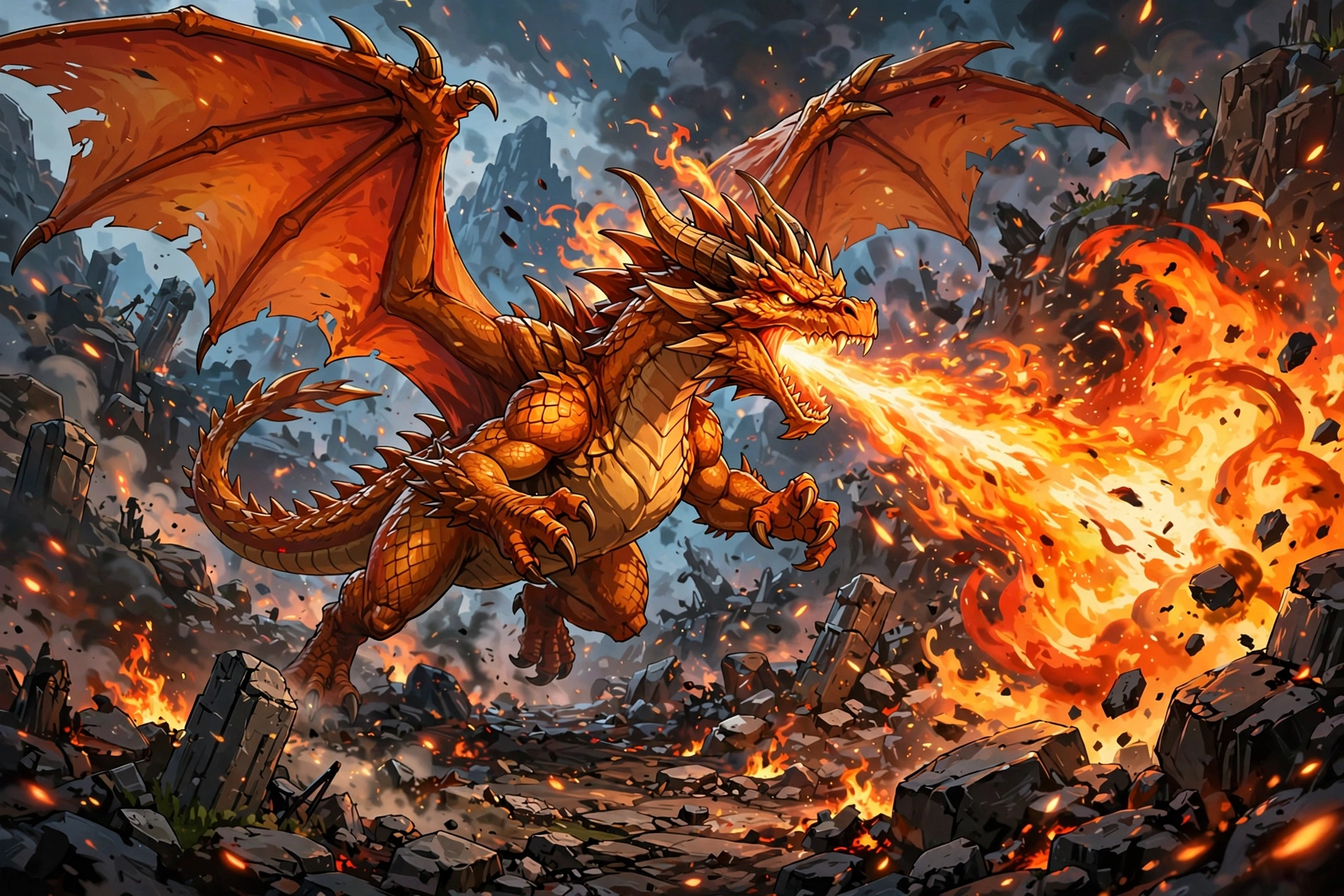
Charizard’s stats, typing, and abilities in Pokémon Infinite Fusion
Charizard keeps its classic stat line in Infinite Fusion. Nothing about the base numbers was changed from the main series games, so you can plan fusions around figures you already know.
- Type: Fire/Flying
- HP: 78 | Attack: 84 | Defense: 78 | Special Attack: 109 | Special Defense: 85 | Speed: 100 (total 534)
- Abilities: Blaze (Fire moves get 50% stronger when HP drops below one third) or Solar Power, the hidden ability (Special Attack rises 50% in harsh sunlight at the cost of some HP each turn)
- Evolution line: Charmander evolves into Charmeleon at level 16, and Charmeleon evolves into Charizard at level 36. Charizard itself is never found in the wild; you get one only by evolving.
The number that matters most is 109 Special Attack. Compare it with the other two Kanto starters: Venusaur sits at 100 and Blastoise at 85. Here is the mechanic most guides get wrong: in Infinite Fusion, the body donates the special stat line (HP, Special Attack, Special Defense), while the head donates the physical line (Attack, Defense, Speed). So a fusion with Charizard as the body builds its special offense on that 109, and a fusion with Charizard as the head inherits its 100 Speed and its Fire typing. Getting the order right is the difference between a good Charizard fusion and a wasted DNA Splicer, and the rankings below are built around the correct rule.
Fire is also one of the types that behaves well in the fusion system. The wiki’s fusion FAQ lists Charizard as a Pokémon whose Fire type is dominant, which means Charizard-headed fusions keep their Fire identity in combinations where other types would get overwritten. Fusions can also inherit either parent’s ability, so both Blaze and Solar Power are available regardless of which order you choose. That reliability is a big part of why Charizard shows up in so many recommended fusion pairs.
How to get Charmander in Pokémon Infinite Fusion
There are three legitimate ways to obtain Charmander in Classic mode, and you will want at least two of them if you plan to experiment with Charizard fusions (fusing consumes both parents into one Pokémon, so a spare Charmander line saves you from being stuck with a single Charizard). Note that Charmander is not a random wild encounter in Classic mode: the wiki’s Pokédex marks all three methods below as static, gift, or trade encounters.
1. Pick Charmander as your starter
The simplest route. At Professor Oak’s lab in Pallet Town you choose between Bulbasaur, Charmander, and Squirtle, exactly like the original Red and Blue. Charmander is widely considered the hardest of the three starts because the first two gyms (Brock’s Rock types and Misty’s Water types) both punish Fire, but it has the flashiest payoff: a fully evolved Charizard stays relevant from the mid-game all the way through the Elite Four, and it fuses well with partners you catch at almost every stage of the story.
2. Trade for one at the Cerulean City Pokémon Center
An NPC in the Cerulean City Pokémon Center trades you a Kanto starter matched to the one you picked. If you started with Squirtle, bring any Water-type Pokémon and you receive Charmander. The trader only appears after you have completed at least one trade in a Viridian, Pewter, Vermilion, or Celadon Pokémon Center, so do a throwaway trade early and this option unlocks. Our every starter in one playthrough guide walks through the full sequence.
3. Find a static overworld Charmander at Viridian River
Once you have Surf, head through the Hidden Forest to Viridian River. Starter Pokémon appear as visible overworld encounters along the river, and Charmander is one of the possible spawns. Listen for the scurrying sound that signals a spawn, then Surf around to find it. These are scripted static encounters rather than random grass battles. The Fandom wiki’s starter-obtaining guide documents the exact method. Playing in Remix mode? Charmander also appears as a genuine wild encounter on Route 9 there.
Evolving Charmander into Charizard
Level Charmander to 16 for Charmeleon, then to 36 for Charizard. No stones or trading required. One fusion-specific detail matters here: if you fuse Charmander or Charmeleon before it finishes evolving, the fused Pokémon still evolves at the normal levels. The fusion FAQ confirms both halves of a fusion evolve at their normal levels or with their normal evolution items, so there is no penalty for fusing early. You can fuse a level 10 Charmander with your favorite partner and it will still become a Charizard-based fusion at 36.
Why Charizard is one of the best fusion parents in the game
Four things combine to make Charizard a premium fusion parent rather than just a popular one. First, the 109 Special Attack: as a body, Charizard donates a special stat line that few Pokémon in the game can match, which makes it the ideal back half of any special-attacking fusion. As a head, it donates 100 Speed and the Fire typing, which makes it the ideal front half when you want a fast Fire-type attacker. No other Kanto starter gives you both options at this level.
Second, the movepool. Charizard learns Flamethrower, Fire Blast, Air Slash, and Dragon Pulse by level-up, and its TM compatibility includes Solar Beam, Earthquake, Focus Blast, Thunder Punch, Shadow Claw, and Rock Slide. A fusion inherits moves from both parents, so Charizard contributes coverage that patches holes in almost any partner. Third, the ability choice actually matters, and it is not locked to head order: fusions can inherit either parent’s ability, so both Blaze and Solar Power are on the table. Solar Power turns a Charizard fusion into a sun-team monster: 50% more Special Attack under harsh sunlight. Pair it with a Drought fusion (Ninetales is the classic partner) and moves like Fire Blast and Solar Beam hit outrageous numbers.
Fourth, Fire/Flying gives most Charizard fusions a Ground immunity from the Flying half, which means Earthquake, the most common coverage move in the game, does nothing to them. That single immunity simplifies team building enormously. The honest downside: 78/78/85 bulk is mediocre, and Rock is a 4x weakness. Stealth Rock strips half of a Fire/Flying fusion’s health on switch-in. Every fusion below is ranked partly on how well the partner covers those flaws. If you want to preview any pair before committing DNA Splicers, run it through our fusion calculator and the fusion tool to check the typing, stats, and sprite first.
The 10 best Charizard fusions, ranked
Order notation: the head is listed first. The head donates the primary typing and the physical stat line (Attack, Defense, Speed); the body donates its secondary typing and the special stat line (HP, Special Attack, Special Defense). Fire is a dominant type for Charizard, so Charizard-headed fusions keep Fire typing reliably. Always double-check unusual pairs in the calculator before you fuse.
- 1. Charizard + Alakazam (Fire/Psychic). The special nuke, and the single strongest argument for understanding the stat rules. Charizard’s head supplies Fire typing and 100 Speed; Alakazam’s body donates a 135 Special Attack stat line, the best special donation in the game. Fire Blast, Psychic, Focus Blast, and Shadow Ball give nearly unresisted coverage. The bulk is terrible, so this is a lead or late-game cleaner, not a pivot. Give it a Focus Sash and point it at anything that does not resist Fire.
- 2. Charizard + Dragonite (Fire/Flying). The famous one, and it earns it. Charizard’s head gives Fire typing and Speed; Dragonite’s body donates a 100/100 special stat line and one of the best physical movepools in the game. The result is a genuine mixed attacker: Fire Blast and Dragon Pulse on the special side, Dragon Claw and Earthquake on the physical side, with a Ground immunity holding it together. Dragonite takes until level 55 to fully evolve (Dratini is a Safari Zone catch), so treat this as a mid-to-late-game project that dominates the endgame.
- 3. Blastoise + Charizard (Water/Fire). The fan-favorite starter core in a single Pokémon. Blastoise’s head supplies Water typing and a 100 Defense physical line; Charizard’s body donates 109 Special Attack and Fire coverage. Water/Fire is one of the best defensive typings in the game: the two types cover each other’s weaknesses almost perfectly. Fire Blast plus Hydro Pump and Ice Beam off 109 Special Attack with real bulk behind it. If you only build one Charizard fusion, build this one.
- 4. Charizard + Gengar (Fire/Poison). Speed and coverage. Charizard’s head gives Fire typing and 100 Speed; Gengar’s body donates a 130 Special Attack line. Fire/Poison hits a huge portion of the game for super-effective damage while resisting Fairy, Fighting, Bug, Grass, and Poison. Shadow Ball plus Fire Blast is the core, with Sludge Bomb and Focus Blast rounding out coverage. This is the best Charizard fusion for players who like fast, aggressive play.
- 5. Mewtwo + Charizard (Psychic/Flying). The post-game monster. Mewtwo’s head donates Psychic typing with a 130 Speed and 106 Attack physical line; Charizard’s body contributes 109 Special Attack and its deep special movepool. The result outruns almost everything in the game and has the coverage to punish whatever switches in: Psychic, Fire Blast, Ice Beam, and Aura Sphere-style Fighting coverage. Save this one for the post-game, when Mewtwo becomes available.
- 6. Gengar + Charizard (Ghost/Flying). The immunities fusion. Gengar’s head keeps Ghost as the primary typing with a 110 Speed line; Charizard’s body adds 109 Special Attack and Fire coverage. Ghost/Flying is immune to Ground, Fighting, and Normal, which gives it free switch-ins against a surprising number of bosses. Shadow Ball and Air Slash with Fire Blast coverage make it a versatile special attacker that is very hard to pin down.
- 7. Charizard + Scizor (Fire/Steel). The defensive answer. Fire/Steel resists nine types and is immune to Poison, which makes this the bulkiest Charizard fusion on the list by a wide margin. Scizor’s body brings 80 Special Defense and access to Bullet Punch for priority and Swords Dance for setup; Charizard’s head adds Fire STAB and Speed. The Ground weakness is real, so keep a Flying or Levitate partner on the team, but against anything without Earthquake this fusion walls entire teams.
- 8. Charizard + Machamp (Fire/Fighting). The physical brawler. Charizard’s head supplies Fire typing, 84 Attack, and 100 Speed; Machamp’s body donates 90 HP and a monstrous physical movepool. No Guard from Machamp’s side makes every attack land, which matters for Stone Edge accuracy. It plays like a faster Blaziken: Flare Blitz, Close Combat, and Stone Edge with the Speed to use them first.
- 9. Jolteon + Charizard (Electric/Flying). The speed demon. Jolteon’s head donates Electric typing with a 130 Speed line; Charizard’s body adds 109 Special Attack and Fire coverage. Electric/Flying is immune to Ground and hits the Water and Flying types that trouble other Charizard fusions. Thunderbolt plus Fire Blast off this Speed tier cleans up late-game routes and most rival fights.
- 10. Charizard + Lapras (Fire/Ice). The wildcard. Fire/Ice looks bad on paper, but offensively it is one of the best coverage combinations in the game: Fire plus Ice plus Lapras’s Water and Electric TM access hits nearly everything for super-effective damage. Lapras’s body also donates a huge 130 HP stat that patches Charizard’s bulk problem. This is the fusion you build when you want raw offensive coverage and do not care about playing safe.
Two honorable mentions. The Venustoizard triple fusion (Venusaur + Charizard + Blastoise) combines all three Kanto starters into a single Grass/Fire/Water Pokémon and is one of the most satisfying post-game projects in Infinite Fusion; see our triple fusion unlock guide for how the mechanic works. And if you picked a different starter, our best starter fusions guide ranks the strongest pairs for the Bulbasaur and Squirtle lines too.
Charizard as head or body: which order should you choose?
Head or body order changes three things: the typing, the stats, and the sprite. The rule from the wiki’s fusion FAQ: the head donates the primary typing and the physical stats (Attack, Defense, Speed); the body donates the secondary typing and the special stats (HP, Special Attack, Special Defense). Either parent’s ability can be inherited.
Use Charizard as the head when you want a fast Fire-type attacker: you keep Fire STAB, 100 Speed, and Charizard’s physical movepool access, while the body supplies the special stats and secondary typing. Use Charizard as the body when you want a special attacker built on 109 Special Attack: the head supplies the typing, Speed, and ability options, while Charizard’s back half does the damage. The sprite follows the head, so check both orders in the calculator. With over 200,000 community sprites in the game, the way your fusion looks is half the decision.
Covering Charizard’s weaknesses through fusion
A pure Charizard has three weaknesses: Water, Electric, and a brutal 4x to Rock. Fusion is the most direct way to erase them, and the pairings above were chosen with this in mind. The Blastoise fusion resists Water and takes neutral Rock damage. The Dragonite fusion keeps the Rock weakness but outruns and knocks out most Rock types before they move. The Scizor fusion resists Rock entirely. When you evaluate any Charizard pair in the calculator, the first thing to check is the weakness list: if Rock and Electric are both still super-effective, the fusion needs team support (a Ground-immune partner or hazard removal) to function.
Stealth Rock deserves special mention because it punishes Fire/Flying fusions harder than any other hazard: 50% of max HP on every switch-in. If your Charizard fusion keeps the Flying secondary typing, avoid switching it directly into hazard-stacking bosses, or pair it with a Rapid Spin or Defog user. Our held items guide covers the items that keep sweepers alive.
Charizard FAQ
Where is the earliest you can get Charmander?
Picking it as your starter at Oak’s lab is the earliest, before the first gym. The Cerulean City trade is the next fastest if you picked Squirtle. The Viridian River static encounter requires Surf, which comes much later. In Remix mode, Charmander can also be caught wild on Route 9.
What level does Charmeleon evolve into Charizard?
Level 36. Charmander becomes Charmeleon at level 16, then Charmeleon becomes Charizard at level 36. Both evolutions happen automatically by level-up with no items needed, and fused Pokémon evolve at the same levels.
What is the best Charizard fusion for the main story?
Blastoise-headed with a Charizard body. Water/Fire covers its weaknesses, Blastoise’s physical bulk plus Charizard’s 109 Special Attack make a balanced attacker, and both halves are available through normal story progression (starter plus Cerulean trade). It handles more boss fights than any other Charizard pair with the least support required.
Should you pick Blaze or Solar Power?
Blaze for general play; it is reliable and always active when you need it. Solar Power for dedicated sun teams: pair the fusion with a Drought setter like Ninetales and the 50% Special Attack boost turns Fire Blast into one of the strongest attacks in the game. Either ability can be inherited regardless of head or body order. Solar Power costs HP every turn, so it wants healing support on longer fights.
Can you get a shiny Charizard fusion?
Yes. Fusing a shiny parent produces a shiny fusion, and the Shiny Charm stacks with the game’s other shiny methods. See our shiny hunting guide for the full odds breakdown and the fastest hunting routes.
Does Charizard Mega Evolve in Infinite Fusion?
No. Mega Evolution does not exist in Pokémon Infinite Fusion, and Mega Stones are not in the game at all. Any guide showing Mega Charizard X or Y content for Infinite Fusion is describing a different game. Triple fusions are this game’s equivalent power mechanic.
Charizard earns its reputation in Pokémon Infinite Fusion the honest way: the best Special Attack of any Kanto starter, a movepool that covers half the type chart, and a Fire typing the fusion system treats as dominant. Get your Charmander through the starter pick, the Cerulean trade, or the Viridian River, evolve it to 36, then fuse it with a partner that fits the correct stat order: Charizard head for a fast physical Fire attacker, Charizard body for a special nuke. Do that, and you will have a fusion that carries teams from the mid-game through the post-game. If you are starting a new save, our download guide has the current 6.7.2 setup instructions.