
Pokémon Infinite Fusion Nuzlocke Challenge: Rules & Winning Strategies
Yes — you can beat a Pokemon Infinite Fusion Nuzlocke, but it is the hardest Nuzlocke format in any Pokémon game. Fusions double the cost of every faint, 16 gyms stand between you and the champion, and one careless DNA Splicer click can cost you two team members at once. This guide gives you the complete ruleset, the fusion rules most guides gloss over, and the survival strategies that actually win runs.
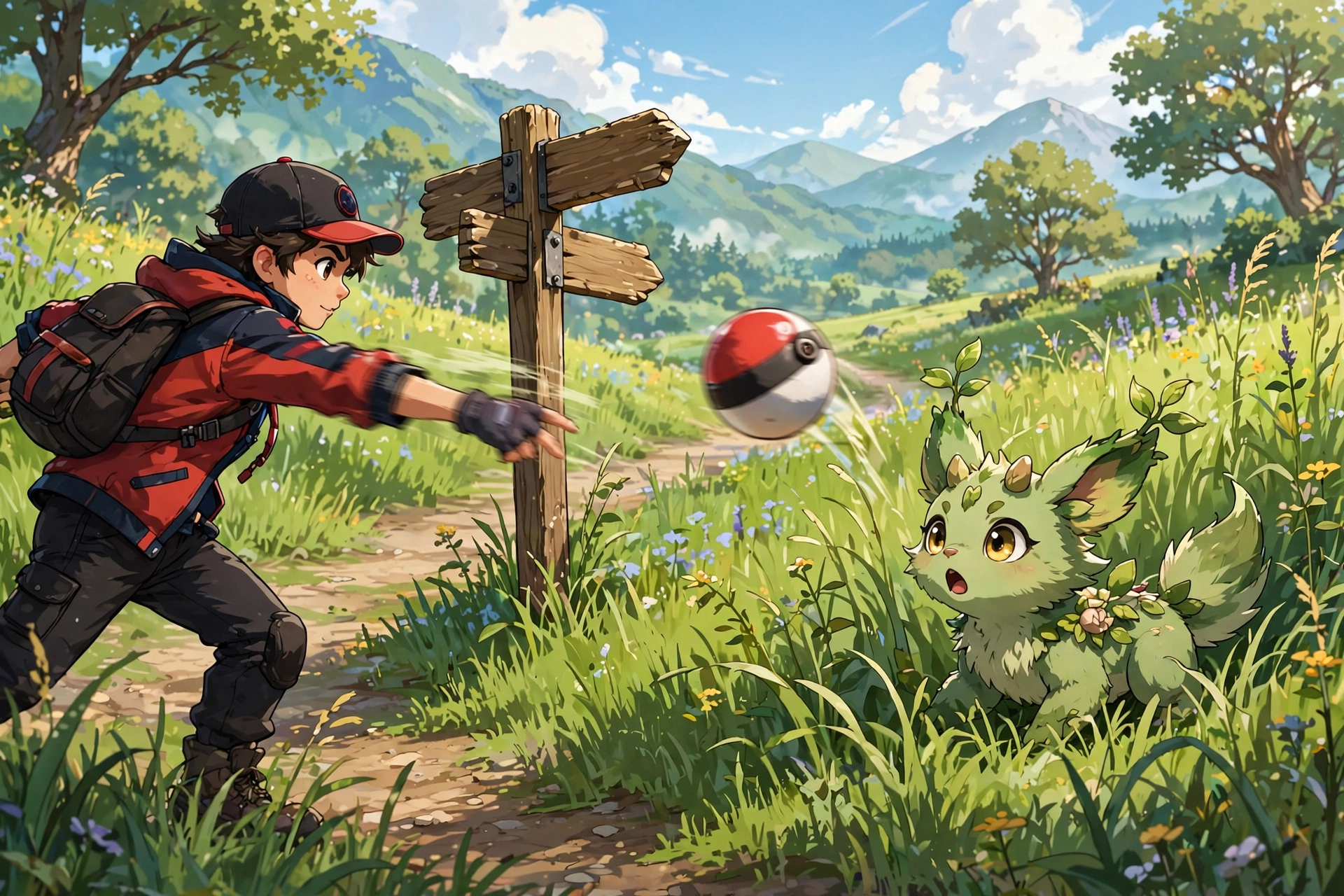
Below you will find the standard rules, the fusion-specific rules that break most runs, the hardcore variant, the optional clauses, and battle-tested strategies for the early gyms, the mid-game, and the Elite Four. This nuzlocke challenge guide for Pokemon players focuses on rules and strategy rather than fusion picks — for the best fusion combinations, see our companion guide.
Quick note: pokemon-infinitefusions.site is an unofficial fan guide. We are not affiliated with Nintendo, Game Freak, or the creators of Pokemon Infinite Fusion.
Setting Up Your Nuzlocke Run
Before you pick your rules, get the basics right. You need the current game version (6.7.2) installed cleanly — no save file from a casual playthrough, because a fresh run starts with a fresh save. You can download Pokémon Infinite Fusion from our download page, which walks you through installation step by step.
Then write down your ruleset before you press New Game. Seriously — write it down, in a notes app, a spreadsheet, or a notebook. Mid-run debates about whether something was “allowed” are how rulesets fall apart. Decide now: standard or hardcore, which clauses you use, and exactly how fusions work in your run. Share the rules with a friend or your stream chat if you have one, because public rules are rules you actually follow.
Why a Pokemon Infinite Fusion Nuzlocke Is Uniquely Brutal
A regular Nuzlocke is a test of team management. A Pokemon Infinite Fusion Nuzlocke is a test of team management where every asset you own can be combined, and every combination can backfire. Three things make it uniquely brutal.
One Faint Costs You Two Pokémon
In a normal Nuzlocke, a death costs you one team member. In Infinite Fusion, your strongest team members are usually fusions — and when a fusion faints, both parent Pokémon are gone. You do not lose one battler. You lose two Pokémon, their held items’ synergy, and every level you invested in both of them. This single rule changes the entire risk calculus of the game.
Sixteen Gyms and Zero Forgiveness
Infinite Fusion does not end at eight badges. The journey continues through a second region’s gyms, which means roughly double the boss fights of a standard Pokémon game. Every additional gym is another chance for a critical hit, a mispredicted switch, or an ace with coverage you did not expect. Long runs die to probability, not just difficulty — more battles mean more rolls of the dice.
Every Fusion Is a Gamble
Fusion is the most powerful tool in the game, and the most dangerous one. A fusion averages its parents’ stats, blends their typings, and inherits one ability — which means a fusion can quietly gain a 4x weakness or lose the ability your whole plan depended on. Every time you fuse, you trade two known quantities for one unknown one. In a Nuzlocke, unknowns kill.
The Standard Pokemon Infinite Fusion Nuzlocke Ruleset
These are the classic Nuzlocke rules, adapted for Infinite Fusion. If you are playing your first run, start here — no hardcore additions yet. The full Pokemon Infinite Fusion Nuzlocke ruleset used by most of the community is built on exactly three pillars.
Rule 1: Catch Only the First Pokémon in Each Area
You may catch only the first wild Pokémon you encounter in each new route, cave, or area. If it faints, flees, or you fail to catch it, that area gives you nothing. Fusions you build yourself do not count as encounters — they are team management, not catches. Most players also allow one gift or static Pokémon per area (more on the gift clause below), since Infinite Fusion hands out excellent gifts like Lapras and Eevee.
Rule 2: If It Faints, It Is Dead Forever
A fainted Pokémon is permanently dead for the run. Release it, or box it in a dedicated “death box” and never touch it again. No Revives, no exceptions, no “it was a dumb mistake” take-backs. The rule exists to make every battle meaningful — the moment you start making exceptions, the challenge evaporates. This is the rule that gives the whole format its emotional weight.
Rule 3: Nickname Every Single Pokémon
Give every caught Pokémon a nickname the moment it joins the team. This is not just flavor. A nicknamed Pokémon is one you are attached to, which means you play more carefully with it — you double-check matchups, you switch out instead of gambling, you heal when you should. Nicknaming is a psychological trick that measurably reduces careless deaths.
Fusion Rules Explained — The Infinite Fusion Nuzlocke Rules That Break Runs
The classic rules above were written for games without fusion. Infinite Fusion needs extra house rules, and this is where most runs quietly collapse — players fuse freely for the first few hours, then realize they never agreed on what a fainted fusion actually means. Agree on all of this before you start.
The Golden Rule: When a Fusion Faints, Both Parents Die
This is the single most important rule in the entire format: a fused Pokémon counts as one life, so when it faints, both parent Pokémon are dead. You cannot unfuse a dead fusion to “save” one half. You cannot box one parent and keep using the other. Both go in the death box, permanently.
Understand what this means in practice. Your level 40 Charizard/Blastoise fusion — two starters’ worth of investment, your answer to three different gyms — dies to one Stone Edge critical hit, and you are down two Pokémon, not one. This is why our Best Fusions for Nuzlocke Challenge guide keeps repeating the same advice: bulk beats power, and never fuse anything you cannot afford to lose twice over.
Free Unfusing vs Permanent Fusions — Decide Before You Start
The community is split on whether you can unfuse living Pokémon during a run, and both options are legitimate — you just have to pick one. With free unfusing allowed, you can separate a living fusion at any time and re-fuse the parents differently, which makes experimentation safe and runs more forgiving. With permanent fusions, once two Pokémon are fused they can never be separated — every fusion is a lifelong commitment, and a bad fusion haunts your roster forever.
For a first run, allow free unfusing. It lets you fix mistakes without ending the run, and learning which fusions work is half the fun. Save permanent fusions for your second or third run, when you want the extra tension. Whatever you choose, the dead-fusion rule above still applies either way: a fainted fusion’s parents are gone, separated or not.
The Mandatory Fusion-Per-Route Variant
Some communities play with an extra rule: you must create at least one new fusion each time you enter a new area, or fuse every new catch immediately. This variant forces constant experimentation and guarantees a run full of wild, unexpected team members. It is chaotic, it is fun, and it is significantly harder — you burn through fusion material fast and you cannot stockpile safe, unfused backups. Treat it as a variant for experienced players, not a default rule.
Hardcore Rules: The Hardcore Nuzlocke Infinite Fusion Veterans Play
Once the standard rules feel comfortable, the hardcore nuzlocke Infinite Fusion veterans play adds four restrictions that remove every safety net. These are the hardcore rules you will see in almost every Infinite Fusion Nuzlocke video online: Set mode, no healing items in battle, strict level caps, and whiteout equals game over. Do not attempt these on your first run.
Set Battle Mode, Always
Switch your battle style to Set before the run starts and never touch it again. In Set mode, the game does not ask whether you want to switch Pokémon after knocking out an opponent’s Pokémon — the next enemy just comes in, and you are stuck with whoever is on the field. This removes free, safe switches and forces you to predict. It is the single biggest difficulty jump in the hardcore ruleset.
No Healing Items in Battle
You may not use Potions, Super Potions, Full Restores, or Revives from your bag during battle. Held items like Leftovers, Berries, and Shell Bell are still allowed — they are part of your build, not a bailout. This rule punishes passive play: you cannot stall your way through a bad matchup by chugging Full Restores. Your team needs real defensive answers, not an item stockpile.
Level Caps — Never Outlevel the Next Gym Leader’s Ace
No Pokémon on your team may exceed the level of the next gym leader’s strongest Pokémon. If the next ace is level 24, your whole team caps at 24 until that badge is won. Level caps are what keep gym fights honest — without them, you can simply overlevel every boss into irrelevance, and the run becomes a grinding simulator instead of a strategy challenge. Check each gym leader’s ace level before you grind, and stop your whole team at the cap.
Whiteout Means Game Over
If your entire party faints, the run is over — start again from the beginning. In standard rules, some players allow themselves to rebuild from boxed reserves after a full wipe. In hardcore, there is no rebuilding. A whiteout is a game over, full stop. This rule is what makes hardcore runs genuinely tense: you are always exactly one disaster away from losing hours of progress.
Optional Clauses to Shape Your Run
The Infinite Fusion nuzlocke rules above are the skeleton. These optional clauses are the dials you turn to tune the difficulty and the fun to your taste. Most community runs use at least the dupes clause and the gift clause.
Dupes Clause
If your first encounter in an area is a species you already own, you may skip it and take the next new species instead. In Infinite Fusion, decide whether “species” means the unfused species only — most players count the base species, so a Pidgey is a dupe even if you plan to fuse it into something new. The dupes clause exists to keep your roster diverse and your run interesting instead of drowning in duplicate early-route Pokémon.
Shiny Clause
Any shiny you encounter may be caught and used, regardless of the first-encounter rule. Shinies are rare enough that nobody considers this cheating — it is a gift from the RNG gods, and the clause just lets you accept it. It does not count as your area encounter, so you still get your normal first catch too.
Gift and Static Encounter Clause
Pokémon given to you as gifts or encountered as fixed statics — Lapras, Eevee, Snorlax, the Fighting Dojo choice — do not count as your area’s wild encounter. You may use them alongside your route catch. In Infinite Fusion this clause matters more than in any official game, because the gifts are exceptional and many are irreplaceable fusion material. Most runs would be miserable without it.
Species Clause
A stricter cousin of the dupes clause: if you encounter anything in the same evolutionary line as a Pokémon you already own, you may re-roll. This stops your box from filling with three stages of the same family across different areas. It is optional and most casual runs skip it, but completionists and variety-seekers like the team diversity it forces.
Popular Variants: Soul Link, Fusion-Only, and Monotype Locks
Finished a standard run and want something wilder? These community variants rebuild the challenge from the ground up. Each one changes which Pokémon you can use, not just how you lose them.
Soul Link Nuzlocke
The soul link nuzlocke Infinite Fusion communities play is a two-player co-op format. Both players catch their first encounter on each route, and the two catches are “linked” as partners. When one player’s Pokémon faints, its partner on the other player’s team must be boxed too. It doubles the heartbreak and doubles the fun — your run can end because your partner made a bad switch three towns away. Play it with a friend you trust, or at least one you can forgive.
Fusion-Only Nuzlocke
Every Pokémon on your team must be a fusion — unfused Pokémon cannot battle, period. This forces you to fuse early and often, which means constant double-or-nothing risk on every team slot. It is the purest expression of the Infinite Fusion Nuzlocke concept, and it is brutally hard, because you can never field a safe, simple, unfused wall when you need one.
Monotype Fusion Locke
Pick one type before the run starts. Every Pokémon you use must be of that type, and every fusion must include at least one parent of the chosen type. A Fire lock, for example, means every fusion needs a Fire-type parent. This variant tests your knowledge of type matchups and the fusion system simultaneously — some types have deep, flexible rosters, and some will make you suffer beautifully.
Picking Your Starter for a Nuzlocke Run
Your starter is the one team member you choose instead of catching, so choose like your run depends on it — because it does. In a Nuzlocke, the best starter is not the coolest one. It is the one that survives the first three gyms and stays useful the longest.
- Prioritize bulk and early matchups over raw power. Check your starter’s typing against the first few gyms — the early Rock and Water gyms punish frail Fire starters and reward anything that can take a hit.
- Look at the full evolution line, not just the cute first stage. You will live with the final evolution for most of the run. A mediocre starter that evolves into a defensive monster beats a strong early-game pick that falls off.
- Value versatile movepools. Starters that learn coverage moves naturally save you TMs and give you answers to bad matchups without fusing.
- Think about fusion potential from day one. Your starter is premium fusion material later — a bulky Water starter fused with the right partner can anchor your team for the entire game. Preview options in the Fusion Tool before you commit to anything irreversible.
- Do not fuse your starter early. It is usually your strongest Pokémon for the first half of the run. Fuse it only when you have a clear, planned upgrade — never on impulse.
Infinite Fusion Nuzlocke Tips: Strategies That Actually Win Runs
Rules tell you what you cannot do. These Infinite Fusion nuzlocke tips tell you what you should do — the habits that separate finished runs from death-box montages. Every one of these comes from watching where real runs actually die.
Fill These Three Team Roles Before the Second Gym
Winning Nuzlocke teams are built around roles, not favorites. Before you challenge the second gym, make sure you have all three: a fast sweeper that moves first and hits hard, a bulky pivot that can switch into hits safely, and a status or utility Pokémon that spreads paralysis, sleep, or burns. Speed kills threats before they move, bulk absorbs the hits you cannot avoid, and status cripples the bosses that outstat you. A team of six sweepers looks exciting and dies to the first bulky gym ace.
When to Fuse — and When to Stay Unfused
Fuse with a plan, not for fun. Good reasons to fuse: patching a 4x weakness, gaining STAB coverage your team lacks, or combining a frail sweeper’s offense with a tank’s bulk. Bad reasons to fuse: curiosity, boredom, or because you just bought a DNA Splicer and want to use it. Two decent unfused Pokémon are often worth more than one mediocre fusion — remember, unfused Pokémon are single lives, while a fusion risks two at once. Preview every fusion in the Fusion Calculator first: check the typing, the averaged stats, and which ability it keeps.
The DNA Splicer Economy — Buy Only What You Fuse
DNA Splicers cost money, and money is a resource in a Nuzlocke too. Do not stockpile Splicers “just in case” — buy one when you have a specific fusion planned, and fuse immediately. An unused Splicer sitting in your bag is cash that could have been Potions, Poké Balls for your next encounter, or held items. Plan the fusion, buy the Splicer, do the fusion, move on. Our Team Builder helps you map out which fusions are actually worth the investment before you spend a single coin.
How to Grind Safely Without Risking the Run
Grinding is necessary but it is also where careless deaths happen — you get bored, you stop paying attention, and a wild Pokémon lands a critical hit on your underleveled trainee. Grind against wild Pokémon at least five levels below your trainee, lead with something that resists the area’s common types, and switch training targets the moment anything looks dicey. Never grind a Pokémon that is weak to the area’s wild encounters. Boring grinding is safe grinding, and safe grinding wins Nuzlockes.
Gym-by-Gym Survival Tips (Honest Ones)
No guide can give you a turn-by-turn script for 16 gyms without inventing details — rosters change between versions, and your team will differ from everyone else’s. What actually works is a strategic framework for each phase of the game. Here it is.
The Early Gyms — Build Your Safety Net
The first three gyms are about survival, not style. Your team is small, your movepools are thin, and you have almost no fusion material. Bring your highest-level Pokémon to every early gym — do not try to “save” your ace for later. Use status moves liberally: paralysis from Thunder Wave or Stun Spore neuters fast gym aces that would otherwise sweep you. And never lead with something weak to the gym’s type just because it is your highest level — type advantage beats raw levels in the early game every time.
The Mid-Game — Where Most Runs Die
The middle gyms are the statistical graveyard of Nuzlocke runs. Your team feels strong, you start taking risks, and then a gym leader’s ace has a coverage move you did not prepare for. The defense against this is scouting: lead with your bulky pivot, see what the ace actually does, then respond. Keep one Pokémon in reserve that resists the gym’s type even if it is underleveled — a resisted switch-in buys you the free turn that saves runs. This is also the phase where fusing for specific coverage pays off most: if the next gym walls your team, fuse an answer instead of hoping.
The Elite Four and Champion
By the endgame, you should have a full team of six with defined roles and no glaring shared weaknesses. The Elite Four punishes one-dimensional teams — if all six of your Pokémon are weak to the same type, one specialist ends the run. Before challenging them, audit your team in the Team Builder and look at the combined weakness chart. Stock up on healing items (for between battles, not during, in hardcore), teach your best TMs, and make sure every team member has a defined job in at least one of the five fights. Redundant roles are fine. Uncovered threats are not.
Common Run-Killers and How to Avoid Them
Almost every failed run dies to one of these. Memorize the list, and you will dodge the majority of Nuzlocke deaths.
- Impulse fusing. Fusing two good Pokémon into one bad fusion halves your roster and doubles your risk. Every fusion needs a written reason — typing patch, coverage gain, or bulk upgrade — before you click confirm.
- Forgetting the ability. A fusion inherits one parent’s ability, and it is not always the one you wanted. Check which ability the fusion actually has before you stake a gym fight on it.
- Grinding on autopilot. Most grinding deaths happen when the player stops paying attention. If you are bored, take a break — a dead trainee costs more time than the break does.
- No answer for status. Paralysis, burns, and poison end runs slowly and then all at once. Carry status healing, or fuse a Natural Cure or status-immune answer into your rotation.
- Overleveling past the cap (hardcore). One extra level of grinding feels harmless until you realize your ace is now illegal for the next gym and has to sit out. Track caps on paper.
- Skipping the pivot. Teams without a safe switch-in bleed momentum every battle. If every switch risks a death, you do not have a team — you have six individuals.
- Fusing your only counter right before its gym. If your Electric type is the only thing standing between you and a Water gym, do not fuse away its Electric STAB the night before. Time fusions around the boss schedule, not your curiosity.
What to Do After a Team Wipe
It happened. Half your team — or all of it — is in the death box. First, breathe. Then assess honestly: in standard rules, you rebuild from whatever legal boxed reserves you have, prioritizing role coverage over favorites. Catch up every area encounter you skipped, because those “missed” routes are now your lifeline. Grind the reserves carefully — underleveled replacements dying in training is how wipes become run-enders.
If you are playing hardcore and the wipe was total, the run is over by the rules. Take the loss with grace, save the death box as a memorial, and start planning the next run — most veteran Nuzlockers will tell you their best runs came right after their worst wipe, because the lessons were fresh. And if a wipe makes you want to quit the format entirely, drop to standard rules for the next attempt. The format is supposed to be hard, not miserable.
Frequently Asked Questions
Can you do a Nuzlocke in Pokémon Infinite Fusion?
Absolutely. The game is fully playable as a Nuzlocke, and the fusion mechanic makes it one of the most interesting Nuzlocke experiences in any Pokémon game. Just agree on your fusion house rules — especially what happens when a fusion faints — before you start, because the default game never addresses it.
What happens when a fused Pokémon faints in a Nuzlocke?
By the standard community rules, a fused Pokémon counts as a single life, so both parent Pokémon are considered dead. You cannot unfuse a dead fusion to save one half. This is the rule that defines the entire format — every fusion risks two team members at once, so never fuse anything you cannot afford to lose.
Can you unfuse Pokémon during a Nuzlocke run?
It depends on the house rules you chose before starting. Many players allow free unfusing of living Pokémon, which makes experimentation safe. Others play with permanent fusions, where every fusion is irreversible and a bad fusion haunts your roster forever. Both are legitimate — the only wrong answer is deciding mid-run when a fusion goes badly.
What is the hardest part of an Infinite Fusion Nuzlocke?
The mid-game, roughly gyms five through ten. Your team feels strong enough to take risks, the bosses start carrying real coverage moves, and the law of large numbers catches up with you — more battles mean more chances for a critical hit at the worst moment. Disciplined switching and scouting matter more here than at any other point in the run.
Should I play hardcore rules on my first run?
No. Play the standard ruleset first — first encounter per area, faint equals dead, nicknames, plus the fusion house rules. Hardcore adds Set mode, no in-battle healing items, and level caps, which together roughly double the difficulty. Learn to survive the standard format before you remove the safety nets.
Do randomizer settings work with a Nuzlocke?
Yes, and the combination is extremely popular — randomized encounters plus Nuzlocke permadeath plus fusion is maximum chaos. The first-encounter rule still applies, just to randomized encounters. Be aware that randomization makes level caps harder to plan around, since you cannot predict gym rosters, so scouting and bulky pivots become even more important.
Conclusion
A Pokemon Infinite Fusion Nuzlocke is winnable — but only with agreed fusion rules, disciplined team roles, and the patience to grind safely and scout every boss. Write your rules down, preview every fusion, respect the level caps, and remember the golden rule: if it faints, both parents die. Now download Pokémon Infinite Fusion, plan your team in the Team Builder, and good luck — you are going to need it, and that is exactly the point.






One Comment