How Does Fusion Work in Pokémon Infinite Fusion? DNA Splicers & Head/Body Order Explained
Learning how to fuse Pokemon Infinite Fusion style is simpler than it looks: grab a DNA Splicer, pick two Pokémon, decide which one is the head and which is the body, then customize the result. Fusion is the heart of the game in version 6.7.2 — it turns two ordinary Pokémon into one brand-new creature with a blended sprite, mixed typing, blended stats, and moves from both parents.
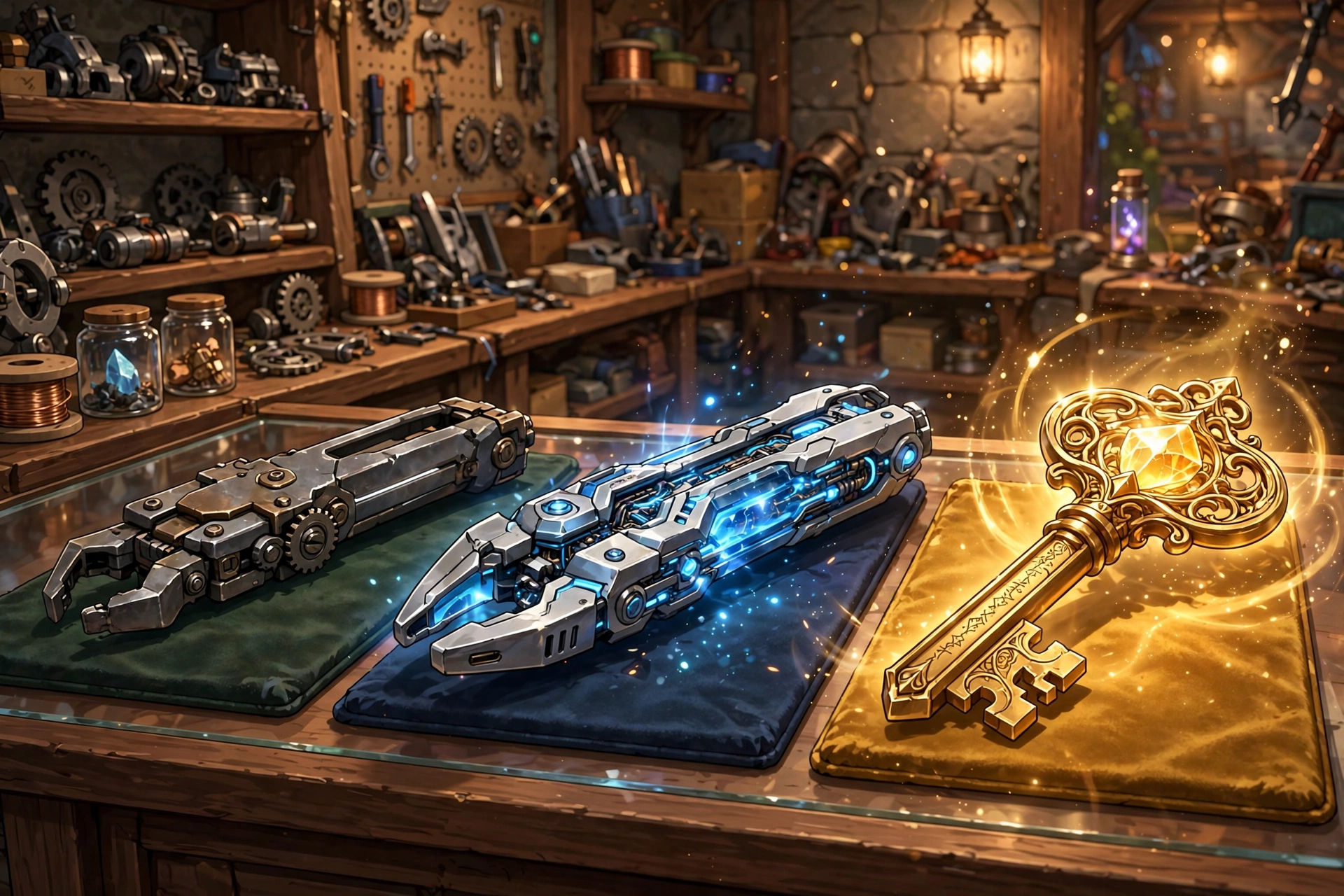
In this guide we break down Pokemon Infinite Fusion fusion explained from start to finish: the step-by-step fusion process, the three splicer types (and the DNA Reverser), exactly what the head and body each control, how typing and stats are calculated, and how to undo a fusion if you change your mind.
Quick note: pokemon-infinitefusions.site is an unofficial fan guide. We are not affiliated with Nintendo, Game Freak, or the creators of Pokemon Infinite Fusion.
How to Fuse Pokemon Infinite Fusion: Step-by-Step Walkthrough
You do not need to visit any special building or talk to any NPC to fuse Pokémon. The whole process happens right from your bag, wherever you are. Here is the exact walkthrough:
- Get a splicer. Buy DNA Splicers for ₽300 at any Poké Mart. Later in the game you unlock better options (covered below). If you have not installed the game yet, download Pokémon Infinite Fusion and start a new save to begin collecting your first splicers.
- Open your bag and use the splicer. The game will ask you to pick two Pokémon from your party or your PC boxes. Almost any two Pokémon can fuse — fusions are even found in the wild, mixing the wild Pokémon of each area.
- Choose the head and the body. Before confirming, the game shows you a preview of both possible orders. If you have never seen the fusion before, the preview appears as a silhouette; fusions with custom sprites show a green-tinted preview. This is the most important decision you will make, because head and body order changes the sprite, typing, and stats (details below).
- Pick a name, nature, and ability. You can name the fusion yourself or keep its default blended name. You choose the nature from the options available, and you pick the ability from the two abilities the parent Pokémon actually had at the time of fusion — for example, fusing a Politoed with Damp and a Glaceon with Snow Cloak gives you exactly those two ability options, regardless of which one is the head.
- Choose the moveset. The fusion’s moves are selected from the moves both parents knew at the time of fusion. Take a moment here: a fusion that pulls a great attack from one parent and perfect coverage from the other is what separates decent fusions from great ones. If you later want more options, the Move Tutor on the top floor of Pokémon Centers can teach moves from either original parent.
- Confirm — and check your bag. Any items held by either parent are returned to your backpack automatically, so you will not lose a held item in the fusion. Pokémon obtained in trades also switch their original trainer to you after fusing.
That is it — your new fusion behaves like a regular Pokémon. It has its own moveset, stats, and Pokédex entry, and both halves will still evolve at their normal levels or with their normal evolution items. One rule to remember: a fused Pokémon cannot be fused again. To try a different order or different parents, you have to unfuse it first.
DNA Splicers, Super Splicers, and Infinite Splicers Explained
Not all splicers are equal. DNA Splicers in Infinite Fusion come in three flavors, and picking the right one saves you money and stats in the long run. There is also a fourth item — the DNA Reverser — that works differently from the rest.
DNA Splicers (the basic option)
DNA Splicers are the workhorse of fusion. They cost ₽300 at any Poké Mart, are consumed after one use, and handle both fusing and unfusing — use one on a fused Pokémon to split it back into its two parents. For your first playthrough experiments, these are all you need.
- Fusion level: a weighted formula — (higher parent level × 2 + lower parent level) ÷ 3. Fusing two level 30s gives you a fusion around level 30; fusing a level 40 with a level 10 lands around level 30 too, so big level gaps get smoothed out.
- IVs: each stat’s IV is the average of the two parents’ IVs.
- Best for: early-game experiments, testing fun combos, and unfusing when you change your mind.
Super Splicers (the competitive option)
Super Splicers cost ₽1,000 each and unlock in Poké Marts after you earn 4 badges. They are also consumed after one use, but they give you measurably better results on keepers you plan to battle with.
- Fusion level: the fusion takes the higher of the two parent levels — no averaging penalty. This alone makes Super Splicers worth it for leveled teams.
- IVs: each stat takes the higher IV of the two parents instead of the average, so a perfect-IV parent lifts every stat it leads in.
- Best for: your final team, gym-leader runs, and any fusion you intend to keep long-term. Preview the result first with our fusion calculator so you know exactly what the IV and level math gives you.
Infinite Splicer (the key item)
The Infinite Splicer is the game-changer every player should hunt down: it is a key item that works like a regular DNA Splicer but is never consumed. You earn it by defeating the robot in the Cinnabar Island laboratory during the story. Once you have it, you can experiment with fusions freely for the rest of the game without spending a single ₽.
There is a catch: the base Infinite Splicer does not give the Super Splicer stat and level bonuses. However, after you beat the Elite Four you can return to the lab, defeat more robots, and upgrade it to function like a Super Splicer too. That upgraded version is the single best fusion tool in the game — unlimited and top-quality.
Infinite Splicer vs Super Splicer: Which Should You Use?
This is the Infinite Splicer vs Super Splicer question we see constantly, and the answer depends on where you are in the story. Before the post-game, an un-upgraded Infinite Splicer and a Super Splicer serve different jobs: Super Splicers win on stats and levels for your serious team, while the Infinite Splicer wins on cost for everything else. After the post-game upgrade, though, the Infinite Splicer effectively replaces Super Splicers entirely — unlimited fusions with Super-level results. Until then, use this rule of thumb:
- Testing a fun combo? Infinite Splicer (or a cheap DNA Splicer).
- Building your actual battle team? Super Splicer, until the post-game upgrade.
- Just unfusing to try a different order? A plain DNA Splicer — the cheapest way to split a fusion apart.
DNA Reversers (not what you think)
Despite the name, DNA Reversers do not unfuse Pokémon. They swap the head and body of an existing fusion — reversing the order. They cost ₽300 at any Poké Mart after your first gym badge. If you fused the wrong order, a Reverser flips it for you without the hassle of unfusing and re-fusing. To actually split a fusion apart, use a splicer, not a Reverser.
Head Body Order in Pokemon Infinite Fusion: What Each One Decides
Here is the mechanic that surprises every new player: fusing the same two Pokémon in a different order creates a completely different fusion. The head body order in Pokemon Infinite Fusion controls the sprite’s appearance, the typing, the stat spread, and even parts of the name. Let’s split it cleanly.
What the head decides
- Sprite appearance: the head’s color palette and pattern shape the look of the fusion’s face and head design. It is the fastest way to recognize which Pokémon is on top.
- Special-leaning stats: HP, Special Attack, and Special Defense are weighted 2/3 toward the head’s base stats and 1/3 toward the body’s. Want a special attacker? Put the strong special-stat Pokémon on top.
- The fusion’s primary type: the fusion’s first type comes from the head’s primary type (with one special rule covered in the typing section).
- The first half of the name: fusion names blend both parents, head first. A Charizard head on a Gyarados body becomes “Chardos” — the “Char-” from Charizard, the “-dos” from Gyarados.
What the body decides
- Body shape: the overall silhouette and physical frame comes from the body Pokémon.
- Physical-leaning stats: Attack, Defense, and Speed are weighted 2/3 toward the body’s base stats and 1/3 toward the head’s. A fast body means a fast fusion.
- The fusion’s secondary type: the body’s secondary type becomes the fusion’s second type (or its primary type if it only has one — see the typing rules below).
- The second half of the name: a Gyarados head on a Charizard body becomes “Gyaraizard” — a totally different creature from Chardos.
- EVs and carryover details: the fusion’s effort values come from the body, and miscellaneous traits like gender, held status, and Poké Ball follow the body too.
Concrete examples: Chardos vs Gyaraizard
Take Charizard and Gyarados — one of the most famous fusion pairs in the community:
- Charizard head / Gyarados body (Chardos): leans on Charizard’s special stats and Charizard’s primary type, with Gyarados’s frame, physical-leaning stats, and secondary type. A bulkier, serpentine body with a fiery special-attacking head.
- Gyarados head / Charizard body (Gyaraizard): flips everything — Gyarados’s primary type and special-leaning stat bias on top, Charizard’s frame and physical stat bias on the bottom. Same two parents, different typing, different stats, different look, different name.
Another telling example from the wiki is the typing rule in action: a Grimer head on an Oddish body becomes Poison/Grass. Oddish would normally contribute its Poison typing as the body, but since Grimer already supplies Poison from the head, Oddish instead contributes its primary type — Grass. The game actively avoids giving you a redundant double-type.
How Typing and Stats Are Decided in a Fusion
Once you understand the head/body split, the typing and stat rules are easy to remember. Everything below is confirmed on the official community wiki.
The typing rule
- First type = the head’s primary type. This is the anchor of the fusion’s typing.
- Second type = the body’s secondary type. If the body Pokémon has only one type, its primary type is used instead.
- The anti-redundancy rule: if the head already provides the type the body would contribute, the body falls back to its primary type. That is why Grimer/Oddish comes out Poison/Grass instead of Poison/Poison.
- One special exception: Normal/Flying types always pass on Flying, which is why Pidgey-line fusions behave the way they do.
Because of these rules, swapping the order can change a fusion’s typing completely — sometimes gaining or losing a crucial weakness or resistance. Always preview both orders with our Pokémon Fusion Tool before you commit a Super Splicer to the plan.
The stat formula
Fusion base stats are weighted averages of the two parents — not simple midpoints:
- Attack, Defense, Speed: 2/3 from the body + 1/3 from the head.
- HP, Special Attack, Special Defense: 2/3 from the head + 1/3 from the body.
This is why competitive fusion builders think in roles: put your bulky physical wall on the body for the Defense bias, and your hard-hitting special sweeper on the head for the Special Attack bias. You can check exact numbers for any pair with our fusion calculator, then save the winning combo in your team builder plan.
Other fusion details worth knowing
- Growth rate: the fusion takes whichever parent’s experience curve has priority (Fast beats Medium, and so on) — so fusions can actually level faster or slower than you expect.
- Shiny fusions: you get different shiny color variants depending on whether the head, the body, or both parents were shiny. Our shiny hunting guide covers how to set this up.
- Self-fusions: fusing two Pokémon of the same species works — the result keeps the base stats but gains a 50% XP bonus.
- Evolution still works: both halves evolve at their normal levels or with their normal evolution items, even while fused.
- Fusions cannot breed and cannot be fused a second time — the only way forward is to unfuse first.
How to Unfuse Pokemon in Infinite Fusion
Changed your mind about a fusion? No problem — how to unfuse Pokemon Infinite Fusion is just as easy as fusing. Use a DNA Splicer (or any splicer) on the fused Pokémon and it splits back into its two original parents. The game recommends using the cheaper option here: in most cases a plain ₽300 DNA Splicer unfuses just as well as a Super Splicer.
If your party is full when you unfuse, the game offers to send one of the two resulting Pokémon to your PC boxes, so you never lose anyone. But there are a few things to know before you split:
- The head’s ability gets re-rolled. When you unfuse a player-created fusion, the body keeps its original ability but the head’s ability is randomly re-rolled — so you might not get the same ability back.
- The head gets a fresh roll on some traits. The body’s nature, EVs, happiness, held item, and history stay intact, but the head is generated with a random nature, gender, and IVs, and its EVs and happiness reset. Treat unfusing as a real decision, not a free undo.
- Watch out with Rare Candies. Experience gained through Rare Candies while fused is lost when you unfuse — the parents revert to their pre-fusion levels. (Levels earned naturally before fusing are preserved.) So do your Rare Candy leveling before the fusion, not during it.
- Traded and wild-caught fusions are trickier. Fusions obtained from trades or wild encounters can have restricted unfusing until later in the game, and unfusing them may randomize abilities for both parents.
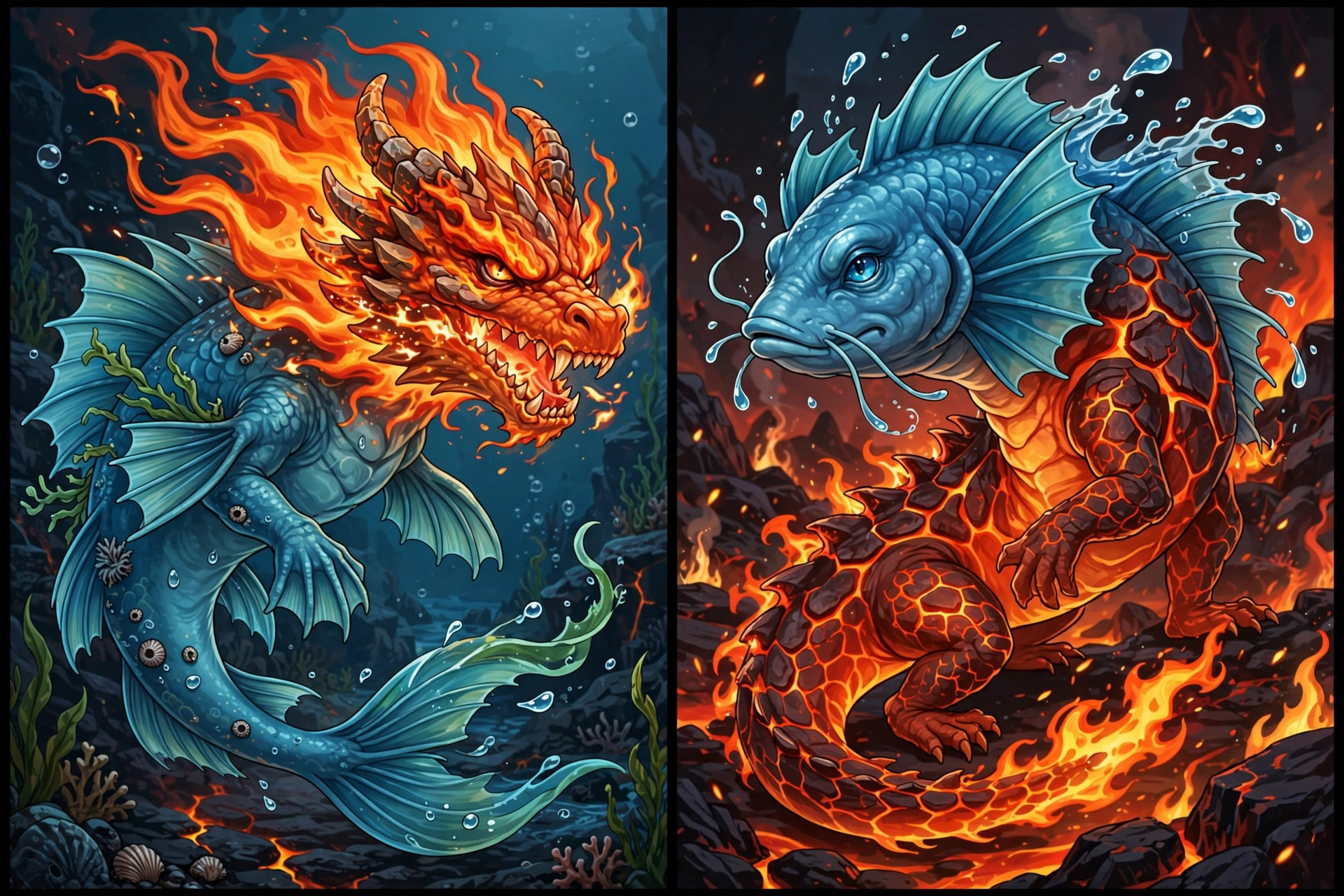
Reversing a Fusion: Swap the Order Without Unfusing
Sometimes you do not want to split a fusion at all — you just fused the wrong order. That is what DNA Reversers are for. Use one on a fused Pokémon and the head and body swap places, flipping the sprite, name, typing, and stat biases in one move.
This is a fantastic tool for experimenters: instead of unfusing, re-buying a splicer, and re-fusing (with the head’s ability re-roll penalty), one ₽300 Reverser from any Poké Mart (after your first badge) flips Chardos into Gyaraizard instantly. If you are comparing two orders of the same pair, look both of them up in the Infinite Fusion dex first, flip with a Reverser, and test which version performs better on your team.
Pro Tips: Plan Every Fusion Before You Commit
Experienced Infinite Fusion players rarely fuse blind. A few minutes of planning turns random experiments into team-defining powerhouses:
- Preview both orders with a fusion calculator first. Run your pair through our Pokémon Fusion Tool and the stat calculator to see both sprites, typings, and stat spreads side by side — then fuse the version that fits your team.
- Plan the ability before the fusion. You only get to choose between the two abilities the parents actually had at fusion time. If you want a specific ability on the fusion, make sure the parent has it before you fuse — the wiki’s Politoed-with-Damp example is a perfect reminder.
- Don’t fuse your only copy of a rare Pokémon. Keep a spare of legendaries and hard-to-find species before experimenting. A bad fusion on your only copy of a rare parent is a heartbreaker.
- Match roles to order. Body bias favors Attack, Defense, and Speed; head bias favors HP, Special Attack, and Special Defense. Build physical sweepers and walls body-up, special attackers head-up. Our 10 best fusion combinations guide shows this principle in action.
- Level with Rare Candies before fusing, not after. As noted above, Rare Candy experience gained while fused disappears on unfusing — parents keep only their pre-fusion levels.
- Save Super Splicers for keepers. Use cheap DNA Splicers or the Infinite Splicer for experiments, and reserve the ₽1,000 Super Splicers (until your Infinite Splicer’s post-game upgrade) for fusions that will stay on your final team.
- Check the shiny angle. Shiny head, shiny body, or both produce different shiny variants — plan your shiny hunts around the order you want. Details in our shiny hunting guide.
Common Mistakes Beginners Make
- Using a DNA Reverser to try to unfuse. Reversers swap the order — they do not split the fusion. To unfuse, use a splicer.
- Fusing two Pokémon with a big level gap using a DNA Splicer. The level formula averages down, so your shiny new fusion can come out weaker than expected. Super Splicers keep the higher level.
- Ignoring the ability screen. Players rush past the ability choice and discover too late that the fusion locked in the wrong ability. Slow down at that step — you cannot change it later without unfusing.
- Forgetting that a fusion can’t be fused again. You cannot stack fusions indefinitely — one fusion per pair of parents. (The exception is the post-game triple fusion system, where specific legendary trios can combine three Pokémon into one. Our triple fusion unlock guide covers how that endgame mechanic works.)
- Assuming the head “does everything.” New players pick the cool-looking Pokémon as the head and ignore the fact that the body decides physical stats, the secondary type, and the EVs. Both halves matter equally.
- Not checking the preview. The game shows you both orders before you commit — but only in silhouette if you have never seen the fusion. A quick check of the dex or the fusion tool reveals the real sprite.
Frequently Asked Questions
How do you fuse Pokémon in Pokémon Infinite Fusion?
Use a DNA Splicer from your bag, select two Pokémon from your party or boxes, choose which one becomes the head and which becomes the body, then pick the name, nature, ability, and moveset. The fusion is created instantly and behaves like a normal Pokémon with its own stats and Pokédex entry.
What is the difference between a DNA Splicer, a Super Splicer, and an Infinite Splicer?
A DNA Splicer is the basic consumable splicer (₽300, any Poké Mart). A Super Splicer is an improved consumable (₽1,000, after 4 badges) that keeps the higher level of the two parents and takes the higher IV in each stat. The Infinite Splicer is a key item earned by beating the robot in the Cinnabar Island lab — it never runs out, and after the Elite Four it can be upgraded to match Super Splicer quality.
Does the head or body matter when fusing?
Yes — enormously. The head decides the sprite’s color scheme, the special-leaning stats (HP, Special Attack, Special Defense), the primary type, and the first half of the name. The body decides the frame, the physical-leaning stats (Attack, Defense, Speed), the secondary type, the EVs, and the second half of the name. Same two Pokémon, opposite orders = two different fusions.
How do you unfuse a Pokémon in Infinite Fusion?
Use any splicer (a cheap DNA Splicer works fine) on the fused Pokémon to split it back into its two parents. Note that the head’s ability, nature, gender, and IVs are re-rolled on unfusing, and any Rare Candy experience gained while fused is lost — so only unfuse deliberately.
Can you reverse a fusion instead of unfusing it?
Yes. A DNA Reverser (₽300, any Poké Mart after your first badge) swaps the head and body of an existing fusion without splitting it apart. It is the fastest way to try the opposite order of a pair you already fused.
Can fused Pokémon evolve or breed?
Fused Pokémon evolve normally — both halves evolve at their usual levels or with their usual evolution items. They cannot breed, and a fusion cannot be fused with another Pokémon again. You must unfuse first if you want a different combination.
How to Fuse Pokemon Infinite Fusion: Final Checklist
Now you know how to fuse Pokemon Infinite Fusion players do it: pick two Pokémon, choose the head and body order deliberately, select the name, nature, ability, and moves, and use the right splicer for the job. Preview both orders with a fusion calculator, reserve your Super Splicers for keepers, and never fuse your only copy of a rare Pokémon.
- Get a DNA Splicer (₽300, any Poké Mart) — or the Infinite Splicer from the Cinnabar lab.
- Preview both head/body orders in the Pokémon Fusion Tool and check stats on the calculator.
- Set the parents’ abilities and levels before fusing.
- Fuse, then slot the result into your team builder plan.
- Wrong order? Use a DNA Reverser. Wrong fusion? Unfuse with a cheap splicer and try again.
Ready to experiment? Download Pokémon Infinite Fusion version 6.7.2, grab a splicer, and start building the team only you could dream up.



7 Comments