10 Best Flying-Type Fusions in Pokémon Infinite Fusion, Ranked
What are the best flying type fusions in Pokémon Infinite Fusion? After running the numbers through the fusion stat formula, the short answer is: Dragonite + Salamence (Dragon/Flying), Garchomp + Gliscor (Ground/Flying), and Volcarona + Togekiss (Bug/Flying) lead the pack, with a Multiscale dragon nuke, a Poison Heal defensive pivot, and a Quiver Dance win condition at the top. This guide ranks the 10 best flying-type fusions in Pokémon Infinite Fusion for your team, with exact head/body orders, resulting typings, estimated stats, ability choices, and build paths in version 6.7.2.
Quick note: pokemon-infinitefusions.site is an unofficial fan guide. We are not affiliated with Nintendo, Game Freak, or the creators of Pokémon Infinite Fusion.
Why Flying-Type Fusions Belong on Your Team
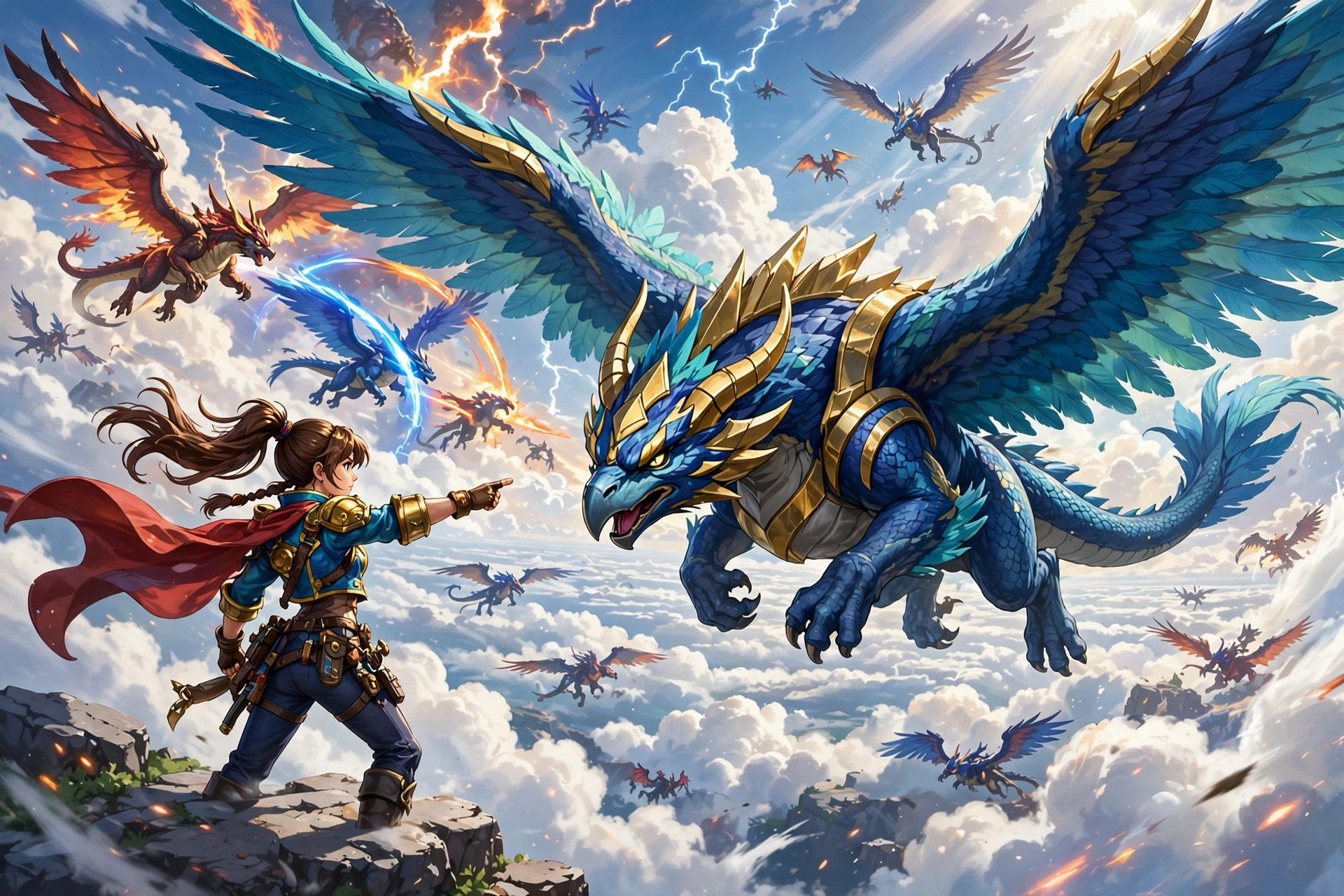
Flying is the type that gives your team free turns. A Flying-type fusion is immune to Ground, which means Earthquake, the most common coverage move in the game, does literally nothing to it. On top of that immunity, Flying resists Fighting, Bug, and Grass and hits Fighting, Bug, and Grass super effectively. That profile makes Flying fusions the best pivots in Infinite Fusion: they switch into the attacks your team fears most and threaten right back.
Flying also has the deepest bench of elite parents in the game. Dragonite, Salamence, Zapdos, Togekiss, Gyarados, Crobat, and Gliscor all bring Flying to a fusion along with championship-level stats and abilities like Multiscale, Intimidate, Serene Grace, and Poison Heal. No other type gives you this many ways to build a great fusion.
The honest tradeoff is Stealth Rock. Rock-type entry hazards hit Flying types for heavy damage on every switch, and several picks below are 4x weak to Rock. The team-building section at the end shows how to handle that. And as always, preview every pair in the Pokémon Infinite Fusion calculator before you spend a splicer: head/body order decides the typing, and the wrong order can turn a Flying fusion into something else entirely.
How We Ranked These Flying Fusions
Every pick below carries Flying in its typing (head’s primary type + body’s secondary type, per the fusion rules) and was scored on four things:
- Does the partner typing earn its place? Ground/Flying (Garchomp + Gliscor) stacks two immunities. Dragon/Flying (Dragonite + Salamence) pairs two elite offensive types. A Flying fusion whose second type adds new weaknesses without new resistances had to earn its slot with overwhelming offense or utility.
- Stat bias matches the role. The 2/3 rule decides everything: the head donates two-thirds of HP, Special Attack, and Special Defense, while the body donates two-thirds of Attack, Defense, and Speed. Every pick lists the order that puts the right stats in the right places, and all numbers are formula estimates, so verify them in the fusion calculator before committing.
- Abilities that define the pick. You choose from the two abilities the parents actually had at fusion time, so Multiscale, Intimidate, Gale Wings, Poison Heal, and Serene Grace are all available when the right parent carries them. On several picks below, the ability is the whole reason the fusion works.
- Speed and momentum. Flying types live and die on moving first or switching freely. Picks that control tempo, through raw Speed, priority moves, or pivoting, scored higher than slow Flying tanks with the same typing.
New to the typing math? Our Pokémon fusion tool guide walks through exactly how head and body order decides typing and stats, including the anti-redundancy rule that changes some of these results in surprising ways.
The 10 Best Flying-Type Fusions in Pokémon Infinite Fusion
#1 Dragonite (Head) + Salamence (Body): The Multiscale Dragon Nuke
Resulting type: Dragon/Flying. Dragonite’s primary type is Dragon and Salamence’s secondary type is Flying, giving you the classic dragon typing: a Ground immunity, resistances to Fire, Water, Grass, Electric, Fighting, and Bug, and weaknesses to Ice (4x), Rock, Dragon, and Fairy. It is the typing every dragon fan knows, now with a stat line neither parent could achieve alone.
The numbers are absurd: roughly 135 Attack, 103 Special Attack, 93 Speed, and 92 HP. That is a mixed attacker that threatens both sides of the defensive spectrum at once, which means walls cannot hide behind their better defensive stat. Outrage and Dragon Claw get STAB, Earthquake covers the Steel types that resist Dragon, and Fire Blast from Salamence’s movepool punishes the physical walls that think they are safe.
Ability: Multiscale from Dragonite is the default and it is transformative: halving all damage at full HP means this fusion survives Ice Shards and other priority it has no right to survive, then retaliates. Intimidate from Salamence is the alternative for a more disruptive lead that softens physical attackers on entry. Moxie is the snowball option if you plan to sweep: every knockout raises Attack further.
Moveset: Dragon Dance, Outrage or Dragon Claw, Earthquake, and Fire Blast or Roost. One Dragon Dance and the 4x Ice weakness stops mattering because nothing faster is left alive to exploit it. This is the best flying-type fusion in Pokémon Infinite Fusion for raw, uncomplicated power.
#2 Garchomp (Head) + Gliscor (Body): The Poison Heal Pivot
Resulting type: Ground/Flying. Garchomp’s primary type is Ground and Gliscor’s secondary type is Flying, and the result is one of the great defensive typings: immune to both Ground and Electric, resistant to Fighting, Bug, Poison, and Fire, and weak only to Ice and Water. Two immunities on one fusion means it switches into an enormous slice of the metagame for free.
The stat blend is built for the pivot role: roughly 107 Attack, 115 Defense, 97 Speed, and 97 HP. You are not sweeping teams with these numbers, and you are not trying to. You are switching into Earthquakes aimed at your Electric-weak teammates, threatening everything back with STAB Earthquake, and staying healthy all game long.
Ability: Poison Heal from Gliscor, paired with a Toxic Orb, is one of the best defensive engines in Pokémon: you heal an eighth of your HP every turn instead of taking poison damage, and you can never be burned, paralyzed, or put to sleep by anything else. Rough Skin from Garchomp is the alternative, punishing the contact moves that Ice and Water attackers must use against you.
Moveset: Earthquake, Toxic, Roost, and Stealth Rock or Swords Dance. The loop is simple and miserable to play against: switch into a Ground or Electric attack, set up rocks or spread poison, Roost off the damage, and never die. Every team with an Electric weakness wants this fusion.
#3 Volcarona (Head) + Togekiss (Body): The Quiver Dance Win Condition
Resulting type: Bug/Flying. Volcarona’s primary type is Bug and Togekiss’s secondary type is Flying. The typing is honest about its flaw: a 4x weakness to Rock and a Stealth Rock problem that demands hazard control. But the offensive payoff is the highest on this list, which is why it ranks this high despite the typing tax.
Roughly 130 Special Attack, 108 Special Defense, and 87 Speed does not look fast until you remember Quiver Dance: one use boosts Special Attack, Special Defense, and Speed all at once, and two uses turn this fusion into something that outspeeds and one-shots nearly the entire game. The bulk (85 HP, 85 Defense, 108 Special Defense) is good enough to find setup turns against passive opponents, which is all a Quiver Dance sweeper needs.
Ability: Serene Grace from Togekiss doubles secondary-effect chances, which turns Air Slash into a 60 percent flinch machine and makes every attack a coin flip the opponent loses. Flame Body from Volcarona is the alternative, punishing contact attackers with burns. Either way, the ability choice shapes how you play the early turns before setup.
Moveset: Quiver Dance, Fire Blast or Fiery Dance, Bug Buzz, and Air Slash or Giga Drain. The coverage is the quiet star: Fire + Bug + Flying hits nearly everything neutrally, and Giga Drain recovers HP against the Rock and Water types that threaten you. Never bring this in while Stealth Rock is up on your side: half its HP vanishes on entry. Clear hazards first, then sweep.
#4 Gyarados (Head) + Dragonite (Body): The Moxie Snowball
Resulting type: Water/Flying. Gyarados’s primary type is Water and Dragonite’s secondary type is Flying: the classic typing with a Ground immunity, resistances to Fire, Water, Fighting, Bug, and Steel, and the famous 4x Electric weakness. You know this typing’s risks. What you may not know is how completely Multiscale and Moxie rewrite them.
The stat line is built to snowball: roughly 131 Attack, 90 Defense, 100 Special Defense, and 94 HP. That Special Defense number matters more than it looks. It means this fusion survives the Thunderbolts aimed at its 4x weakness more often than opponents expect, especially with Multiscale active, and then it starts collecting Moxie boosts.
Ability: Moxie from Gyarados is the sweeper’s engine: every knockout raises Attack one stage, so the first kill makes the second easier and the third inevitable. Multiscale from Dragonite is the safety net that guarantees you survive the turn you set up. Pick Moxie when this is your win condition, Multiscale when it is your mid-game breaker.
Moveset: Dragon Dance, Waterfall, Earthquake or Ice Fang, and Bounce or Stone Edge. One Dragon Dance fixes the merely decent 80 Speed, and then STAB Waterfall starts flinching things to death while Moxie stacks. Keep it away from faster Electric types until they are removed, and it will close out games by itself.
#5 Zapdos (Head) + Gliscor (Body): The VoltTurn Fortress
Resulting type: Electric/Flying. Zapdos’s primary type is Electric and Gliscor’s secondary type is Flying, producing the legendary bird typing: a Ground immunity, resistances to Flying, Steel, Bug, Grass, and Fighting, and weaknesses only to Ice and Rock. It is one of the cleanest defensive profiles in the game, and the stats behind it are better than the typing suggests.
Roughly 98 Special Attack, 112 Defense, 97 Speed, and 85 HP is the profile of a defensive pivot that also threatens real damage. The Defense number is the surprise: Gliscor’s body gives this fusion enough physical bulk to switch into Fighting and Bug attacks all day, while Zapdos’s special side keeps special attackers honest. Few fusions are this comfortable on both sides of the ball.
Ability: Poison Heal from Gliscor with a Toxic Orb is the long-game choice: passive recovery plus status immunity makes this nearly unkillable in drawn-out fights. Pressure from Zapdos is the disruptive choice, draining the PP of the opponent’s best moves twice as fast. Static is the punisher’s choice, paralyzing contact attackers that dare touch you.
Moveset: Thunderbolt or Discharge, Roost, Volt Switch, and Defog or Heat Wave. Volt Switch is the key move: it lets you scout, deal chip damage, and escape to the perfect counter without ever giving the opponent a free turn. Pair it with a Ground-type teammate and the two of them form a VoltTurn core that controls the entire tempo of a match.
#6 Crobat (Head) + Aerodactyl (Body): The 130-Speed Menace
Resulting type: Poison/Flying. Crobat’s primary type is Poison and Aerodactyl’s secondary type is Flying. The typing gives you a Ground immunity, a Fighting resistance, and weaknesses to Electric, Ice, Psychic, and Rock. Nothing about the typing is special. Everything about the Speed is: roughly 130 Speed makes this one of the fastest fusions in the entire game.
At 130 Speed, almost nothing in story mode moves before you, which changes how you evaluate every other stat. The roughly 100 Attack does not need to be elite when you always attack first. The 70 Defense and 78 Special Defense do not need to be good when you kill things before they hit back or U-turn out of bad matchups. Speed this extreme is a strategy by itself.
Ability: Infiltrator from Crobat ignores Reflect, Light Screen, Safeguard, and Substitute, which means defensive opponents cannot hide behind their setup. Rock Head from Aerodactyl is the alternative: it removes Brave Bird’s recoil, turning the strongest Flying STAB in the game into free damage.
Moveset: Brave Bird, Cross Poison, U-turn, and Taunt or Roost. The game plan is pure tempo: Taunt the setup sweepers and hazard setters before they move, U-turn out of anything threatening while dealing chip damage, and clean up weakened teams with Brave Bird. It will not wall anything, but it was never supposed to.
#7 Infernape (Head) + Talonflame (Body): The Gale Wings Assassin
Resulting type: Fire/Flying. Infernape’s primary type is Fire and Talonflame’s secondary type is Flying. The typing has the standard Fire/Flying issues (4x Rock weakness, Stealth Rock vulnerability), but the ability this fusion carries rewrites the speed rules of the entire game, which is worth more than a clean typing.
Roughly 89 Attack, 94 Special Attack, 120 Speed, and 77 HP is the profile of a fast mixed attacker. The mixed offenses matter: Close Combat and Flare Blitz punish physical walls, while Fire Blast and Focus Blast punish the special walls that switch into them. Opponents cannot wall both sides at once, and at 120 Speed very few of them get to move first anyway.
Ability: Gale Wings from Talonflame gives all Flying-type moves +1 priority at full HP, which means Brave Bird always moves first no matter how fast the opponent is. That single ability turns every revenge-kill situation in your favor. Iron Fist from Infernape is the alternative, boosting the punching moves (Fire Punch, Thunder Punch, Mach Punch) by 20 percent for a more conventional attacker.
Moveset: Brave Bird, Flare Blitz, Close Combat, and U-turn or Swords Dance. Lead with it, trade favorably with priority Brave Bird, and U-turn out when the matchup turns. Like every Gale Wings user, it hates Stealth Rock: at full HP the ability works, below full it does not, so hazard control is not optional for this pick.
#8 Lucario (Head) + Crobat (Body): The Fastest Fighter
Resulting type: Fighting/Flying. Lucario’s primary type is Fighting and Crobat’s secondary type is Flying, combining two of the best offensive types in the game. Fighting and Flying STAB together hit almost everything for neutral damage or better, with weaknesses to Psychic, Flying, Fairy, Electric, and Ice keeping it honest.
The stat line is built around one number: roughly 117 Speed. That is fast enough to outrun most of the unboosted metagame, and the roughly 97 Attack and 100 Special Attack behind it are both genuinely usable. This is one of the few Fighting fusions that does not need priority moves to function, because it is simply faster than the things that would revenge-kill it.
Ability: Infiltrator from Crobat is the premium choice: it ignores screens and Substitute, which means stall and setup teams cannot hide. Justified from Lucario is the alternative, turning every Dark-type attack aimed at your Psychic weakness into an Attack boost. Inner Focus is the safety pick if flinches are ruining your day.
Moveset: Close Combat, Brave Bird, Swords Dance, and Extreme Speed or Bullet Punch. After one Swords Dance at 117 Speed, very little survives two hits. The priority move in the last slot is insurance against the handful of things that do outspeed you. This is the Fighting-type answer for players who are tired of slow Fighting types.
#9 Metagross (Head) + Skarmory (Body): The Hazard Fortress
Resulting type: Steel/Flying. Metagross’s primary type is Steel and Skarmory’s secondary type is Flying, giving you the famous defensive typing: immunities to Ground and Poison, resistances to nearly everything else, and weaknesses only to Electric and Fire. It is the typing that made Skarmory a competitive staple for decades, now with Metagross’s offensive stats bolted on.
Roughly 137 Defense with 75 HP is genuine wall territory: physical attackers simply do not break through. The roughly 98 Attack is the upgrade over a pure Skarmory build: instead of being passive setup bait, this fusion threatens real damage with STAB Iron Head and Brave Bird, which means opponents cannot ignore it while they set up.
Ability: Sturdy from Skarmory guarantees survival of one hit from full HP, which is exactly what a hazard-setting wall wants: you always get your hazards up. Clear Body from Metagross is the alternative, making Intimidate and stat-dropping moves useless against you. Weak Armor is the spicy option for a faster, more aggressive build that trades Defense for Speed on every physical hit taken.
Moveset: Spikes or Stealth Rock, Roost, Iron Head, and Whirlwind or Brave Bird. Set hazards, Roost off damage, Whirlwind away setup sweepers, and watch the opponent’s team bleed out on every switch. This is the backbone pick: it does not win games by itself, but it makes every other pick on this list better.
#10 Gengar (Head) + Drifblim (Body): The Unburdened Glass Cannon
Resulting type: Ghost/Flying. Gengar’s primary type is Ghost and Drifblim’s secondary type is Flying: immunities to Ground, Normal, and Fighting, with weaknesses to Ghost, Dark, Electric, Ice, and Rock. Three immunities on an offensive fusion is remarkable, because it means this glass cannon switches into more attacks than glass cannons are supposed to survive.
Roughly 117 Special Attack, 90 Speed, and 90 HP is honest special-attacker territory. Shadow Ball gets STAB and hits everything except Dark and Normal types hard; the coverage pool (Thunderbolt, Focus Blast, Will-O-Wisp, Destiny Bond) handles the rest. The Defense is a tragic 49, so the entire strategy is built around never getting hit: you switch into immunities, you attack, and you leave.
Ability: Unburden from Drifblim doubles Speed when your held item is consumed, which turns a respectable 90 Speed into an overwhelming one after a single Berry or Gem. Cursed Body from Gengar is the alternative, randomly disabling the move that hits you, which punishes opponents for attacking into your frailty.
Moveset: Shadow Ball, Thunderbolt or Focus Blast, Will-O-Wisp or Destiny Bond, and Substitute. The Substitute + Unburden sequence is the signature play: Sub down to activate your Berry, double your Speed, and sweep a team that thought it was faster than you. Keep it away from priority moves and faster Dark types, and it deletes teams that rely on Fighting and Normal offense.

Solving the Stealth Rock Problem
Every flying-type fusion in Pokémon Infinite Fusion shares one enemy: Stealth Rock. Rock-type entry hazards deal damage based on the target’s weakness to Rock, and several picks on this list (Volcarona + Togekiss, Infernape + Talonflame) are 4x weak to Rock, which means they lose half their HP just for switching in. A Flying team without hazard control is a team that loses before the battle starts.
The fix has two parts. First, run a hazard remover: Defog or Rapid Spin clears Stealth Rock from your side, and several Flying parents learn Defog naturally (Zapdos and Skarmory both get it, so the #5 and #9 fusions can carry it themselves). Second, punish the hazard setters: fast Taunt users like the #6 Crobat + Aerodactyl fusion stop Stealth Rock from going up in the first place. Fast teams prevent hazards; bulky teams remove them. Pick the approach that fits your playstyle.
Beyond hazards, Flying’s other structural weakness is Electric and Ice coverage, which is everywhere in the late game. The classic answer is a Dragon-type partner: Dragon resists Electric and Fire, covering two of the three types Flying fears, and hits back hard against the Dragons that threaten your sweepers. Our best dragon-type fusions guide pairs naturally with this one. For the full defensive picture, the best steel-type fusions guide covers the other half of the classic Flying + Steel core. Plan the whole team in the team builder and preview every sprite in the Infinite Fusion dex.
Flying Fusion Mistakes to Avoid
- Ignoring the typing math. Dragonite + Salamence is Dragon/Flying, but Salamence + Dragonite would be Dragon/Dragon, which collapses to pure Dragon. Same parents, completely different fusion. Always check both orders in the fusion calculator before you fuse.
- Leading with your Rock-weak sweeper. Volcarona + Togekiss and Infernape + Talonflame are at their best as mid-game sweepers, not leads. Bring them in after hazards are cleared and the Rock-type threats are removed, not before.
- Forgetting that 4x weaknesses cut both ways. Your Flying fusions threaten Grass, Bug, and Fighting types, but Ice Shard and other priority moves ignore your Speed advantage entirely. Scout for priority before committing your fastest sweepers.
- Building a team of six Flying types. One or two Flying fusions give you the Ground immunity and momentum; six gives you a shared Electric and Rock weakness that one smart opponent exploits six times. Diversify the rest of the team.
If you have not installed the game yet, download Pokémon Infinite Fusion (current version 6.7.2) and start collecting these parents. Many of the Flying parents on this list, like Gyarados, Crobat, and Staraptor lines, are available early, so you can start building your Flying core long before the late-game legendaries show up.

FAQ: Best Flying-Type Fusions in Pokémon Infinite Fusion
What is the best flying-type fusion in Pokémon Infinite Fusion?
Dragonite (head) + Salamence (body) is the strongest overall: Dragon/Flying typing, roughly 135 Attack with 103 Special Attack, and a choice of Multiscale, Intimidate, or Moxie. For defense, Garchomp + Gliscor (Ground/Flying) with Poison Heal is nearly unkillable, and for setup sweeping, Volcarona + Togekiss (Bug/Flying) with Quiver Dance ends games.
Why are Flying types weak to Stealth Rock?
Stealth Rock deals damage based on how weak the target is to Rock-type moves. Flying is weak to Rock, so Flying fusions take heavy hazard damage, and ones with a 4x Rock weakness (like Bug/Flying or Fire/Flying) lose half their HP on switch-in. Always run Defog or Rapid Spin support on a team with Flying sweepers.
Does head or body order matter for flying-type fusions?
Completely. The head sets the primary type and contributes two-thirds of HP, Special Attack, and Special Defense; the body sets the secondary type and contributes two-thirds of Attack, Defense, and Speed. Dragonite + Salamence gives Dragon/Flying, while the reversed order gives a different typing and stat bias entirely. Preview both orders before fusing.
What is good against flying-type fusions?
Electric, Ice, and Rock moves are super effective against pure Flying, and most Flying fusions keep at least one of those weaknesses. Faster Electric types and Ice Shard priority are the classic answers. When building around a Flying core, bring partners that resist those types: Ground types handle Electric, and Steel types handle Ice and Rock.
Which flying fusion is best for beginners?
Gyarados + Dragonite (Water/Flying) is the most forgiving: great bulk, simple Dragon Dance setup, and both parents are obtainable through normal play. If you want something faster, Crobat + Aerodactyl gives you 130 Speed and a simple hit-and-run game plan that teaches good pivoting habits.
Final Word on the Best Flying-Type Fusions
The best flying type fusions in Pokémon Infinite Fusion all do the same thing: they turn the Ground immunity and momentum that make Flying great into a concrete game plan. Dragonite + Salamence ends games with raw power, Garchomp + Gliscor never dies, and the other eight picks cover every role from hazard-setting walls to priority assassins. Pick the one that fits the hole in your team, clear the Stealth Rock first, preview the order in the fusion calculator, and give your team the wings it has been missing. For the classic partner core, see our best steel-type fusions next.
Sources: fusion typing and stat mechanics verified against the Pokémon Infinite Fusion Wiki; base stats and movepools per the official series data. All fusion stat numbers are estimates from the 2/3 + 1/3 weighted formula: confirm exact values in-game or with the fusion calculator before committing rare splicers.