How Evolution Works in Pokémon Infinite Fusion: Every Method Explained
Evolution in Pokémon Infinite Fusion confuses almost every new player, because the real question is not “how does my Pokémon evolve” but “how do the two halves of my fusion evolve.” Here is the short answer: each half of a fused Pokémon evolves separately, under its own normal conditions, exactly as if it were unfused. A Squirtle and Pidgey fusion does not evolve once at some mystery level. It evolves at level 16 (the Squirtle half becomes Wartortle), again at level 18 (the Pidgey half becomes Pidgeotto), and again at level 36 (both halves reach their final forms). This guide explains every evolution method in Pokémon Infinite Fusion 6.7.2: level-ups, stones, trade evolutions, and special methods, plus what happens to levels when you unfuse.
Quick note: pokemon-infinitefusions.site is an unofficial fan guide. We are not affiliated with Nintendo, Game Freak, or the creators of Pokémon Infinite Fusion.
The golden rule: each half evolves on its own in Pokémon Infinite Fusion
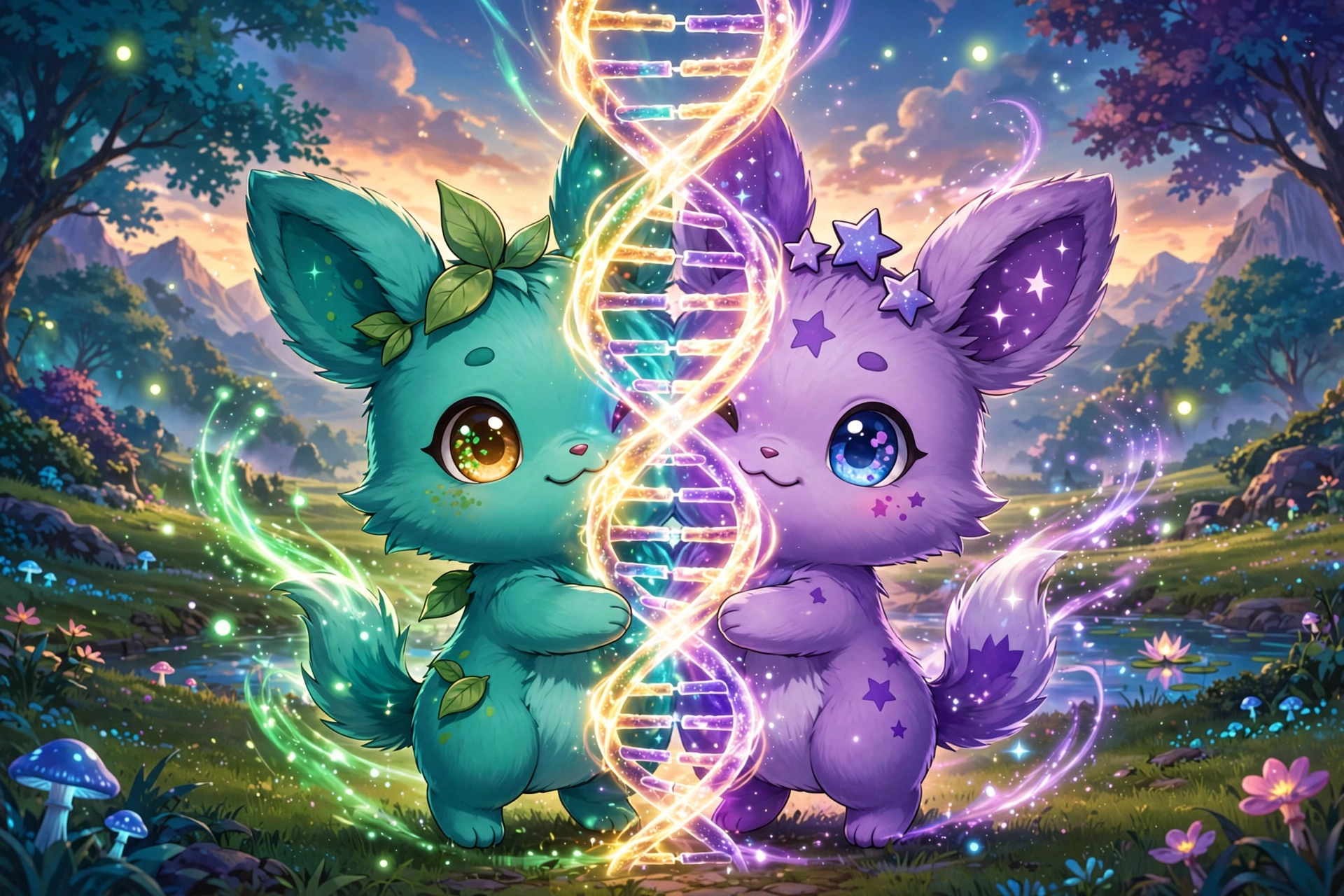
Forget everything you know about evolving a single Pokémon. A fusion is two Pokémon sharing one sprite, one health bar, and one level display, but underneath, both halves keep their own identity. The developer confirmed this directly in the game’s official FAQ: each half of a fused Pokémon evolves separately. So for a Squirtle and Pidgey fusion, you get a chain like this: Squirtgey evolves at level 16 into Wargey (Wartortle plus Pidgey), evolves again at level 18 into Wareotto (Wartortle plus Pidgeotto), and evolves a final time at level 36 into Blasteot (Blastoise plus Pidgeot). Every evolution changes the fusion’s name, sprite, typing, and stats, because the underlying combination changed.
This single rule answers most evolution questions in the game. If you know how a Pokémon evolves on its own, you know how that half evolves inside a fusion. Level evolutions trigger at the same levels. Stone evolutions need the same stones. Nothing about the fusion process changes a half’s requirements, and you never have to unfuse a Pokémon just to evolve it. If you are still fuzzy on the basics of fusing itself, read our guide to how fusion actually works first, then come back.
Level-up evolution in fusions, step by step
Level-based evolution is the most common kind, and it works exactly the way you would expect once you accept the golden rule. As your fusion gains experience and levels up, the game checks each half after every level. When a half reaches the level where it would normally evolve, the evolution sequence starts for that half only. The other half sits tight and keeps its current stage until its own level arrives.
A worked example: Squirtle fused with Pidgey
Let us walk through the developer’s own example, because it shows the pattern perfectly. You fuse a level 5 Squirtle (body) with a level 5 Pidgey (head) and get Squirtgey. You train it normally.
- Level 16: the Squirtle half hits its evolution level. Squirtgey evolves into Wargey, which is Wartortle fused with Pidgey. The Pidgey half is unchanged.
- Level 18: the Pidgey half hits its evolution level. Wargey evolves into Wareotto, which is Wartortle fused with Pidgeotto.
- Level 36: both halves reach a milestone at the same level (Wartortle evolves at 36, Pidgeotto evolves at 36). The fusion evolves twice in a row and becomes Blasteot: Blastoise fused with Pidgeot.
Notice that the fusion’s name changes at every stage, because each stage is genuinely a different combination. This also means the sprite updates each time. If you want to preview what any stage looks like before you commit to training it, the fusion sprite tool shows the custom sprite for every combination.
What if both halves are ready at the same time?
When both halves hit their evolution level on the same level-up, as in the level 36 step above, the game simply runs the evolution sequence twice, one half after the other. You will watch the first half evolve, then the second half evolve right after. Nothing is skipped and nothing breaks. The same thing happens with three-stage lines fused together: a Caterpie fused with a Weedle-style line can evolve three or four times across a few levels as each half climbs its own ladder.
One practical tip: because each half evolves at its own pace, a fusion with a slow-evolving half (think Dragonair at level 55, or Larvesta all the way at 59) will sit in a mid-stage form for a long time while the other half finishes early. Plan your team around the slowest half if you want the final form by a particular gym. Our team builder can help you map out when each member of your squad reaches its final stage.
Stone evolutions: each half needs its own stone
Stone evolutions follow the same per-half logic. If one half of your fusion evolves with a stone, you use that stone on the fusion, and only that half evolves. The classic community example is Nidokey, a fusion of Mankey (body) and Nidorino (head). The Nidorino half evolves with a Moon Stone. The Mankey half evolves by leveling up to 28. To get the final Nidoape form, both conditions must be met: give the fusion a Moon Stone for the Nidorino half, and train it to level 28 for the Mankey half. Do one without the other and you get a half-evolved fusion.
Eevee fusions are the most asked-about case. Say you fuse Eevee with Caterpie. It evolves by level into Eevee/Metapod at 7 and Eevee/Butterfree at 10, following the Caterpie half. The Eevee half just sits there, unevolved, until you use a Water, Fire, or Thunder Stone on the fusion. Use a Water Stone and the Eevee half becomes Vaporeon while the other half stays whatever it currently is. Players on the community forums confirm this works exactly like the single-Pokémon case, just applied to one half.
Watch out for the single most common stone mistake in the game: Doublade does not evolve with a Moon Stone. It needs a Dusk Stone. Several players have reported a “stuck” Doublade fusion that was simply being offered the wrong stone. When a stone evolution refuses to trigger, double-check the stone against the main-series requirement first.
Where to find evolution stones in Infinite Fusion
Stones are easier to get here than in most main-series games. The Goldenrod City Department Store sells evolution stones directly, which the community walkthrough confirms. There is also a Stone Maniac in a house a little north of the PokéBall Workshop in Goldenrod City who hands out a Dawn Stone, Sun Stone, Dusk Stone, or Moon Stone depending on the time of day, and gives you a Shiny Stone once you have collected all four. Moon Stones also show up as pickups, including a hidden one in Mt. Moon. Because stones are buyable, there is rarely a reason to delay a stone evolution for long, and our key item locations guide covers the other one-time items you will want alongside them.
Trade evolutions simply evolve at level 40
This is the change long-time players love most. In the main games, Kadabra, Machoke, Graveler, Haunter, and friends only evolve when traded. In Pokémon Infinite Fusion, the developer removed trading from the equation: trade evolutions now evolve at level 40. Train a fused Kadabra half to level 40 and it becomes Alakazam, no link cable or trading partner needed. This was confirmed in the game’s official FAQ and it applies across the board.
What about trade evolutions that need a held item in the main games, like Slowpoke with a King’s Rock, Onix with a Metal Coat, or Porygon with an Up-Grade? These are still trade evolutions at heart, so the level 40 rule covers them. One honest caveat: it is not officially documented whether the half must be holding the link item when it hits level 40. The safe play is to keep the item equipped on the fusion as it approaches 40, the same way you would hold it during a trade. If you have tested a specific item evolution and found otherwise, that is exactly the kind of detail worth sharing in the comments.
The level 40 rule also shapes team planning. If your fusion includes a trade-evolution half, you know its final form arrives at 40 no matter what. That makes trade lines some of the most predictable partners in the game. Punch their target level into your training plan and check the result in the fusion calculator so you know exactly what stats and typing you are building toward.
Friendship, time of day, and other special evolution methods
Beyond levels, stones, and trades, the game keeps the standard evolution triggers you know from the main series. Friendship evolutions like Golbat into Crobat or Eevee into Espeon and Umbreon use the usual high-friendship level-up. Day and night evolutions check the in-game clock the same way. The game tracks happiness normally, and community walkthroughs note that an NPC in Cerulean City can tell you how happy your lead Pokémon is, which is handy before you invest levels in a friendship evolution.
That said, the exact friendship thresholds and a few edge-case triggers are not documented for version 6.7.2 anywhere we could verify, so treat unusual cases (location-based evolutions, move-known evolutions) as “works like the main games unless proven otherwise” and keep a save from before you test. If a specific special evolution behaves differently in your game, it is worth reporting, because these are the details thin guides always skip.
Unfusing, levels, and what carries over in Pokémon Infinite Fusion
Evolution and unfusing interact in ways that trip people up, so here is the full picture, drawn from the community’s Fusion FAQs. Under the hood, each half keeps its own experience total. The fusion’s displayed level is derived from the original experience of both Pokémon plus whatever they have earned since fusing. There is a known quirk: experience earned between levels while fused only counts toward the head’s progress, with the body getting none of it. In practice this rarely matters, but it explains odd moments where one half seems “behind” after you unfuse.
The Rare Candy trap
Here is the warning that saves players real progress: experience from Rare Candies used while fused is lost when you unfuse. The community documented it with a clean test. Take two level 5 Pokémon, feed them Rare Candies to level 55 before fusing, and the fusion comes out around level 53. Unfuse later and both Pokémon are level 55 again, everything kept. But if you fuse first at level 5, then use Rare Candies to push the fusion to 55, unfusing drops both halves straight back to level 5. Every candy is wasted. The rule is simple: do your Rare Candy leveling before you fuse, never after, unless you never plan to separate them.
Abilities and ownership after unfusing
When you unfuse a fusion you created yourself, the body keeps its original ability, but the head’s ability gets rerolled. This matters if you fished for a specific ability on the head half: unfusing can lose it. There is also an ownership rule. Fused Pokémon that do not have your Trainer ID, such as ones from Wonder Trade, cannot be unfused until the postgame. And one hard limit to remember: a fused Pokémon cannot be fused with another Pokémon, fused or not. If you want three-way combinations, that is the separate triple fusion mechanic, which works through its own machine and rules.
Smart evolution strategy for your fusion team
Knowing the mechanics is one thing. Using them well is what wins gyms. The biggest strategic choice is when to fuse relative to evolving. Fusing early means both halves level and evolve together while you train one team slot, which is efficient. Evolving a half before fusing locks in its final form immediately, which is better when you want a specific final typing or ability from the start and do not want to babysit a mid-stage fusion through tough fights.
Moves are the other half of the decision. Halves learn moves from their own level-up tables as they grow, so evolving at the right moment can mean the difference between getting a key move or missing it until the move reminder. Before you evolve a half, skim what it learns at each stage in the Infinite Fusion dex. If a mid-stage learns something great at level 34 and the final form does not, delay that half’s evolution until 34. The B button cancels any evolution prompt, same as the main games, so you are always in control.
For completionists, evolution is also the fastest way to fill the Pokédex. Every stage of every half registers its own entry, and fused forms get entries too. Evolving both halves of a fusion to their final stages can add a surprising number of entries in one training session. Pair that with our egg hatching guide if you are breeding specific halves to evolve.
Finally, keep your game current. Evolution behavior gets tuned between versions, and everything in this guide describes 6.7.2, the latest real version. If you are on an older build, download Pokémon Infinite Fusion fresh so the mechanics match what is described here.
Evolution not working? Troubleshooting stuck evolutions
When an evolution refuses to trigger, run through this checklist before assuming the game is bugged.
- Wrong stone: the number one cause. Doublade needs a Dusk Stone, not a Moon Stone. Eevee-line stones are specific: Water, Fire, or Thunder for the classic three. Check the main-series requirement for the half you are evolving.
- Wrong level: remember that each half evolves at its own level, not the fusion’s displayed level. A half that is “behind” because of the head-only experience quirk may need an extra level or two.
- Everstone equipped: a half holding an Everstone will not evolve, same as the main games. Check held items if an evolution keeps failing silently.
- Trade evolution below 40: Kadabra, Machoke, and the rest evolve at level 40 here, not at their old trade moment. If yours is 38, it is not stuck, it is just early.
- Accidentally cancelled: pressing B during the evolution prompt stops it, and the game will ask again on the next level-up. If you cancelled by reflex, just gain one more level.
- Rare Candy confusion: Rare Candies do trigger evolutions when the new level meets a half’s requirement. What they do not do is stick around after an unfuse, as explained above.
Pokémon Infinite Fusion evolution FAQ
Can a fused Pokémon evolve?
Yes. Each half evolves separately at its own normal trigger: its level, its stone, or level 40 for trade evolutions. You never need to unfuse to evolve.
Do I need to unfuse my Pokémon to use a stone on it?
No. Use the stone on the fusion directly and only the half that responds to that stone will evolve. The other half is untouched.
At what level do trade evolutions evolve?
Level 40, across the board, with no trading required. This is confirmed in the developer’s FAQ.
Can I stop a fusion’s evolution?
Yes. Press B during the evolution animation to cancel it, or give the half an Everstone to hold. The game will prompt you again at the next level-up.
Does evolving change the fusion’s sprite and name?
Every time. Each evolution stage is a different combination with its own custom sprite and its own blended name, which is why a Squirtle and Pidgey fusion has four distinct forms across its journey.
What happens if I fuse two fully evolved Pokémon?
You get the final fusion immediately, with nothing left to evolve. This is the fastest route to a finished team member when you have the patience to train both halves separately first.
Will my fusion keep its level if I unfuse and re-fuse?
Mostly. Halves keep experience earned through battles, but Rare Candy experience gained while fused is lost on unfusing, and the head’s ability gets rerolled. Level with battles before fusing if you plan to separate them later.
Evolution in Pokémon Infinite Fusion looks complicated until you learn the one rule that runs everything: the two halves evolve independently, each on its own terms. Level evolutions fire at each half’s own level, stones evolve only the half that answers to them, trade evolutions arrive at level 40, and unfusing has real costs you should plan around. Master that, and every fusion on your team becomes a project you can schedule instead of a mystery you hope works out. Now go evolve something weird.